Description
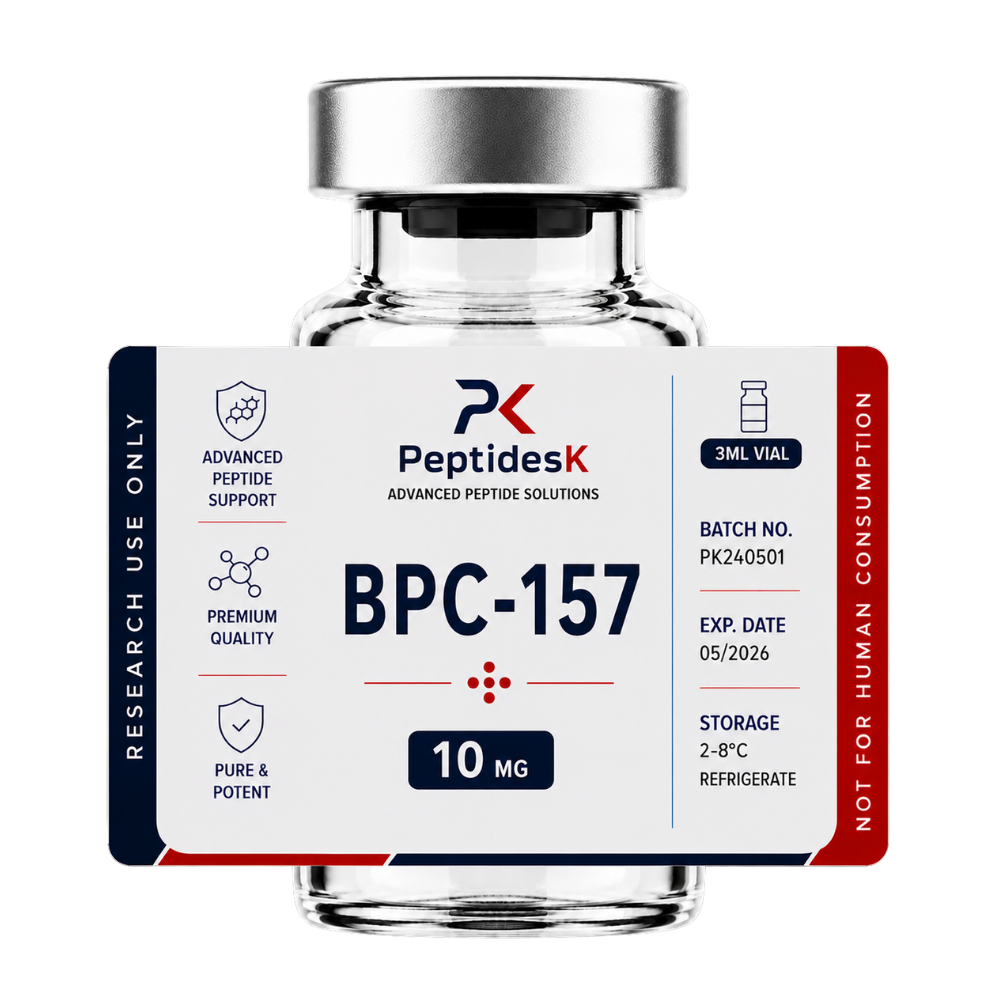
BPC-157 10mg Core Metrics
Technical specification parameters optimized for integrating high-purity BPC-157 into focused cell assay rows.
| Research Parameter | Assay Benchmark Profile | Internal Catalog Link |
|---|---|---|
| Sequence Blueprint | H-Gly-Glu-Pro-Pro-Pro-Gly-Lys-Pro-Ala-Asp-Asp-Ala-Gly-Leu-Val-OH | High-Purity Series → |
| Purity Baseline | ≥ 98.0% via High-Performance HPLC | Tissue Repair Series → |
What Is BPC-157 10mg and How Does It Work?
BPC-157 10mg is a stable synthetic pentadecapeptide composed of 15 amino acids, derived originally from a protective protein found naturally in human gastric juice (Body Protection Compound). In laboratory settings, it is widely utilized as a benchmark reference standard due to its remarkable stability and profound impact on cellular protection and regenerative pathways.
The BPC-157 mechanism of action involves multi-faceted intracellular signaling pathways. Rather than relying on a single receptor target, BPC-157 interacts with various growth factor receptors, modulates nitric oxide (NO) production, and influences focal adhesion kinase pathways. This complex biochemical activity allows the peptide to protect endothelial cells, promote cellular survival under metabolic stress, and regulate tissue architecture during injury recovery.
| Parameter | Specification Standard |
|---|---|
| Product Format | 10mg Purified Lyophilized Powder / Vial (BPC-157 10mg) |
| Purity Baseline | ≥ 98.0% Certified Purity via HPLC |
| Amino Acid Sequence | Gly-Glu-Pro-Pro-Pro-Gly-Lys-Pro-Ala-Asp-Asp-Pro-Gly-Leu-Val |
| Molecular Weight | 1419.56 g/mol |
| Physical Appearance | Sterile filtered, pure white freeze-dried cake |
What Is BPC-157 Used for in Research?
In modern cellular biology, pharmacology, and regenerative medicine laboratories, the BPC-157 research peptide is investigated across a wide spectrum of experimental models. Because of its unique gastric stability, researchers frequently utilize it to study cytoprotection, gastrointestinal mucosal defense, and systemic organ protection against toxic agents.
Furthermore, investigators study how the BPC-157 peptide influences collagen production, fibroblast recruitment, and cell migration across various damaged tissues. Its consistent behavioral profile in both in vitro cell cultures and animal models makes it an indispensable compound for mapping the limits of natural mammalian healing.
How Does BPC-157 Affect Tissue Repair Research?
When studying BPC-157 tissue repair research, scientists consistently observe enhanced cellular proliferation and accelerated extracellular matrix synthesis. The peptide promotes the survival of cells under ischemic or oxidative stress, ensuring a higher density of viable cells remain in wounded tissue beds.
Additionally, BPC-157 acts as a master regulator of growth factor expression, upregulating local receptors that signal fibroblasts to deposit new collagen fibers. This organized deposition prevents haphazard scar formation and ensures that newly repaired tissue achieves optimal biomechanical tensile strength.
How Does BPC-157 Affect Tendon and Ligament Research?
One of the most heavily documented applications of the peptide lies in BPC-157 tendon / ligament / muscle research. Tendons and ligaments notoriously suffer from poor natural blood supply, making experimental models of soft tissue recovery exceptionally challenging.
Research demonstrates that BPC-157 significantly accelerates the outgrowth of tendon fibroblasts from explants, promotes tendon healing even under high-stress conditions, and improves the healing rates of transected muscles and medial collateral ligaments. It acts as a powerful driver of functional soft tissue restoration.
How Does BPC-157 Support Angiogenesis Research?
Cellular regeneration is entirely dependent on a reliable supply of oxygen and nutrients, which is why BPC-157 angiogenesis / VEGFR2 / nitric oxide interactions are a central focus of current pharmacological studies.
BPC-157 stimulates the formation of new blood vessels (angiogenesis) by upregulating Vascular Endothelial Growth Factor Receptor 2 (VEGFR2) and modulating local nitric oxide synthesis. By expanding the microvascular network around damaged tissue sites, the peptide ensures that healing areas receive the robust blood flow required for rapid cellular recovery.
What Is the Difference Between BPC-157 and TB-500?
While both BPC-157 and TB-500 are premier recovery peptides, they operate through distinct biological mechanisms:
| Feature | BPC-157 (Body Protection Compound) | TB-500 (Thymosin Beta-4 Fragment) |
|---|---|---|
| Primary Focus | Angiogenesis, blood vessel growth, and tendon/ligament repair. | Actin binding, systemic cell mobility, and tissue flexibility. |
| Cellular Action | Modulates nitric oxide pathways and upregulates VEGFR2. | Regulates actin polymerization to speed up cell migration. |
| Combined Use | Often combined in equal ratios (Wolverine Blend) to target both vascular growth and cellular mobility simultaneously. | |
How Is PeptidesK BPC-157 10mg Tested for Purity?
Ensuring absolute analytical precision is vital when conducting sensitive tissue research. Any chemical impurities or sequence truncations can easily distort experimental data and invalidate cell culture findings.
Every single production lot of our inventory undergoes rigorous quality verification, utilizing advanced BPC-157 HPLC (High-Performance Liquid Chromatography) assays and mass spectrometry to confirm sequence integrity, guaranteeing a certified BPC-157 COA purity baseline of ≥98.0%. Lot-specific analysis reports are publicly accessible for every batch.
What Does PeptidesK BPC-157 10mg Contain?
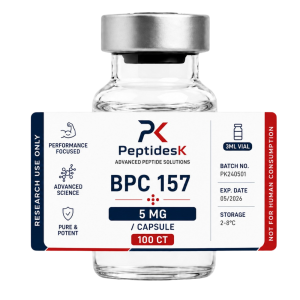
Each individual vial of PeptidesK BPC-157 10mg contains a certified, precisely measured total of 10 milligrams of active lyophilized powder. The manufacturing process utilizes solid-phase peptide synthesis (SPPS) followed by sterile filtration and freeze-drying.
This ensures the delicate 15-amino-acid chain remains fully protected and stable inside the glass vial until the researcher introduces a reconstitution liquid, guaranteeing consistent, reliable behavior across all experimental setups.
Storage and Handling Instructions
Storage Recommendations
- Freeze-Dried Powder: Keep unopened vials stored in a laboratory freezer at -20°C to -80°C for long-term stability up to 24 months. Protect from direct light.
- Transit Stability: Lyophilized vials tolerate ambient shipping temperatures up to 25°C for up to 3 weeks without loss of bioactivity.
- Reconstituted Liquid Phase: Once mixed with bacteriostatic water, store under refrigeration between 2°C and 8°C. Use active liquid within 10 to 14 days maximum. Do not refreeze.
Reconstitution Protocol
- Allow the 10mg vial to reach ambient room temperature naturally before opening the cap to eliminate condensation moisture inside the glass.
- Sanitize the rubber entry stopper thoroughly with a fresh isopropyl alcohol wipe.
- Slowly introduce 1ml to 2ml of sterile bacteriostatic water down the inside glass wall of the vial.
- Do not shake. Gently swirl horizontally in small circles until the cake completely dissolves into a clear liquid.
Where Can I Buy BPC-157 10mg for Research?
When searching where to buy BPC-157 10mg online or evaluating competitive BPC-157 10mg price rates, partnering with a trusted, transparent supplier is essential. Substandard peptides often suffer from degradation or incorrect net peptide content, compromising sensitive laboratory assays.
At PeptidesK, our direct-to-lab distribution model ensures that every batch of our BPC-157 10mg for sale meets strict quality benchmarks. To order lot-tested 10mg vials backed by fast domestic shipping across the USA, check our selection directly on peptidesk.com.
Analytical Verification & COA Reports: View our latest purity charts, HPLC reports, and third-party testing documents directly on our PeptidesK Third-Party Lab Testing Page.
Shop by Research Goals
Explore our catalog of analytical-grade compounds grouped by research category:
| Category | Primary Research Focus |
|---|---|
| Recovery & Healing Peptides → | Soft tissue repair, tendon recovery, and cellular migration models. |
| Anti-Aging & Longevity Peptides → | Cellular renewal, extracellular matrix support, and anti-senescence research. |
| Fat Loss & Metabolic Peptides → | Metabolic energy, mitochondrial support, and cellular efficiency. |
| Focus & Cognitive Peptides → | Nootropic signaling, neuroprotection, and stress balance assays. |
| Muscle Growth & Building Peptides → | Anabolic signaling, growth factors, and muscle tissue recovery. |

There are no reviews yet.