
Description
Quick-Reference Overview Matrix
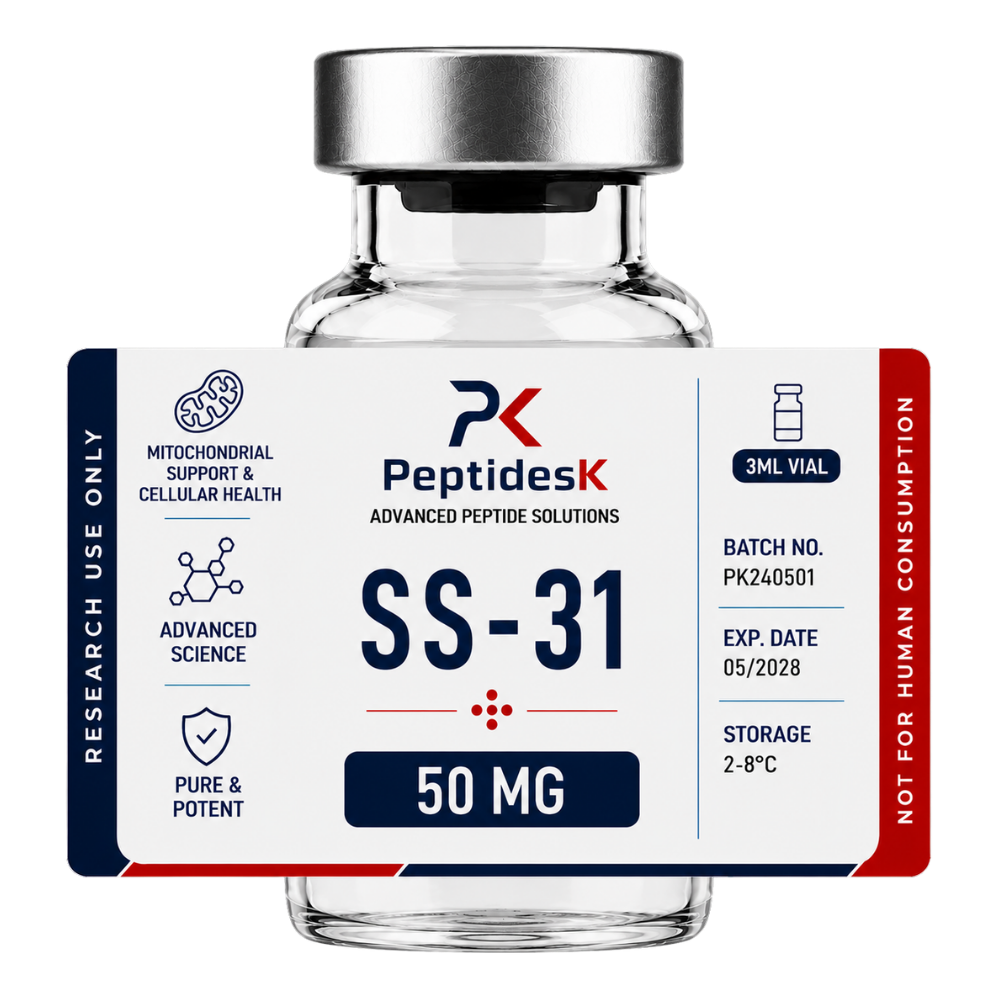
For efficient laboratory evaluation, the matrix below consolidates the core analytical, storage, and cross-reference parameters of SS-31 50mg.
| Core Parameter | Technical Summary & Quick Data | Internal Cross-Reference |
|---|---|---|
| Purity & Grade | ≥ 98% HPLC Certified Sterile filtered, vacuum-sealed lyophilized cake optimized for bioenergetic assays. | View High-Purity Series → |
| Primary Target Path | Cardiolipin Binding: Selectively targets the inner mitochondrial membrane, optimizing electron transport chain efficiency and preventing ROS generation. | Cellular Longevity Series → |
| Storage Protocol | Lyophilized: -20°C to -80°C (Up to 24 months). Reconstituted: 2°C to 8°C (Must use within 10–14 days). | Buy Reconstitution Diluents → |
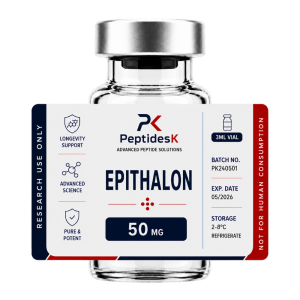
| Synergistic Assays | Frequently evaluated alongside epigenetic DNA regulators like Epitalon or cellular recovery chains for longevity and aging models. | Pair with Epitalon 10mg → |
What Is SS-31?
What Is SS-31?
SS-31 (also known as Elamipretide or Bendavia) is a synthetic, cell-permeable tetrapeptide with a unique structural motif that specifically targets mitochondria. Consisting of alternating aromatic and basic amino acids, this low-molecular-weight compound crosses the plasma membrane independent of receptor-mediated paths and concentrates selectively at the inner mitochondrial membrane. It is extensively utilized in laboratory settings to study mitochondrial dysfunction, ischemia-reperfusion injuries, and cellular bioenergetics.
SS-31 50mg Overview
Our SS-31 50mg offers a highly stable analytical formulation designed strictly for in vitro diagnostics, microfluidic cell tracking, and structural evaluation. Due to the high 50mg concentration per vial, it provides researchers with excellent material yield for high-throughput screening and long-term assay timelines.
| Parameter | Specification |
|---|---|
| Product Format | 50mg Vial (Lyophilized Powder) |
| Sequence | D-Arg-2′,6′-Dmt-Lys-Phe-NH2 |
| Molecular Formula | C32H49N9O5 |
| Molecular Weight | 639.8 g/mol |
| Purity Level | ≥ 98% (HPLC Monitored) |
| Physical Appearance | Sterile filtered, white lyophilized cake/powder |
| Core Research Focus | Cardiolipin Binding, Mitochondrial ROS Suppression, ATP Synthesis Regulation |
Regulatory Compliance Notice: This product is synthesized, distributed, and intended solely for laboratory research and development purposes. It is strictly not for human therapeutic use, clinical trials, or agricultural applications. Analytical data sheets are available upon institutional request.
Research Applications of SS-31 Peptide
Research Applications of SS-31 Peptide
In analytical biochemistry and biological aging publications, SS-31 is evaluated across metabolic stress and organ preservation models. Researchers utilize this compound to analyze:
- Oxidative Stress Abatement: Studying how the peptide limits the production of mitochondrial Reactive Oxygen Species (ROS) without blocking physiological cell signaling pathways.
- ATP Yield Optimization: Investigating its capacity to restore structural matrix integrity, directly improving cellular energy generation during metabolic decline.
- Ischemia Recovery Models: Evaluating organ and tissue preservation metrics (such as in renal or myocardial models) during oxygen deprivation assays.
SS-31 Mechanism of Action
The biological activity of SS-31 centers completely around its high affinity for **Cardiolipin**, an essential polyunsaturated phospholipid found exclusively within the inner mitochondrial membrane:
- Binds selectively to cardiolipin, preventing it from undergoing lipid peroxidation paths when exposed to localized free radicals.
- By anchoring cardiolipin, SS-31 stabilizes the structural cristae architecture of the inner mitochondrial wall.
- This architectural stabilization optimizes electron transfer through the Electron Transport Chain (Complex I-IV), increasing ATP synthesis while dramatically dampening electron leakage (ROS production).
Research Overview: Benefits vs. Technical Risks
| Observed Research Benefits | Technical Risks & Limitations |
|---|---|
| • Rapid Cellular Penetration: Low molecular weight and alternating basic/aromatic architecture allow the compound to cross outer cell envelopes instantly without relying on active transporters. | • Concentration Saturation: Extremely high assay doses can oversaturate cardiolipin sheets, occasionally masking structural baseline data during transport tracking. |
| • High Half-Life in Powder Form: The presence of a D-amino acid (D-Arg) at its starting anchor provides superior peptide-chain resistance against ambient storage degradation paths. | • Solubilized Sensitivity: Once reconstituted into liquid form, the compound remains vulnerable to structural denaturing if exposed to light or temperature spikes. |
Peptide Comparison Matrix
Peptide Comparison Matrix
To assist in experimental optimization, the table below provides a comparative analysis between SS-31 50mg and alternative anti-aging or cellular protection research compounds:
| Peptide Compound | Primary Mechanism | Core Research Focus | Target Receptors | Molecular Weight |
|---|---|---|---|---|
| SS-31 50mg(This Product) | Cardiolipin Targeting | Inner mitochondrial wall stabilization, ATP yield increase, ROS suppression. | Cardiolipin Lipids | 639.8 g/mol |
| Epitalon 10mg | Telomerase Activation | Cellular lifespan extensions, telomere maintenance, pineal modeling. | Epigenetic DNA | 390.4 g/mol |
| MOTS-c 10mg | Mito-Encoded Peptide | Systemic metabolic homeostasis, glucose uptake tracking assays. | AMPK Pathways | 2174.6 g/mol |
Storage & Handling Instructions
Storage & Handling Instructions
To ensure total preservation of the tetrapeptide structure and protect your batch yield from hydrolysis paths, adhere to the following temperature regulations:
- LONG-TERM
Lyophilized Cake: Transfer immediately to a laboratory freezer set at -20°C or -80°C. Stable for up to 24 months. - SHORT-TERM
Logistics Resilience: Highly stable in unconstitutional form. Can endure ambient shipping temperatures up to 25°C for 3 weeks without damage. - POST-RECONSTITUTION
Liquid Matrix: Keep refrigerated strictly between 2°C and 8°C. Utilize the compound within 10–14 days. Do not re-freeze the liquid layer.
Reconstitution Guidelines
- Allow the 50mg vial to naturally reach room temperature equilibrium before opening.
- Sanitize the core rubber stopper interface with a high-purity alcohol swab.
- Slowly inject 1ml to 3ml of sterile bacteriostatic water, aiming the fluid stream against the interior glass envelope to prevent mechanical shock.
- Do not shake. Gently swirl the vial in circular horizontal directions until the dense 50mg cake is fully dissolved into a crystal-clear liquid layer.
There are no reviews yet.