Description
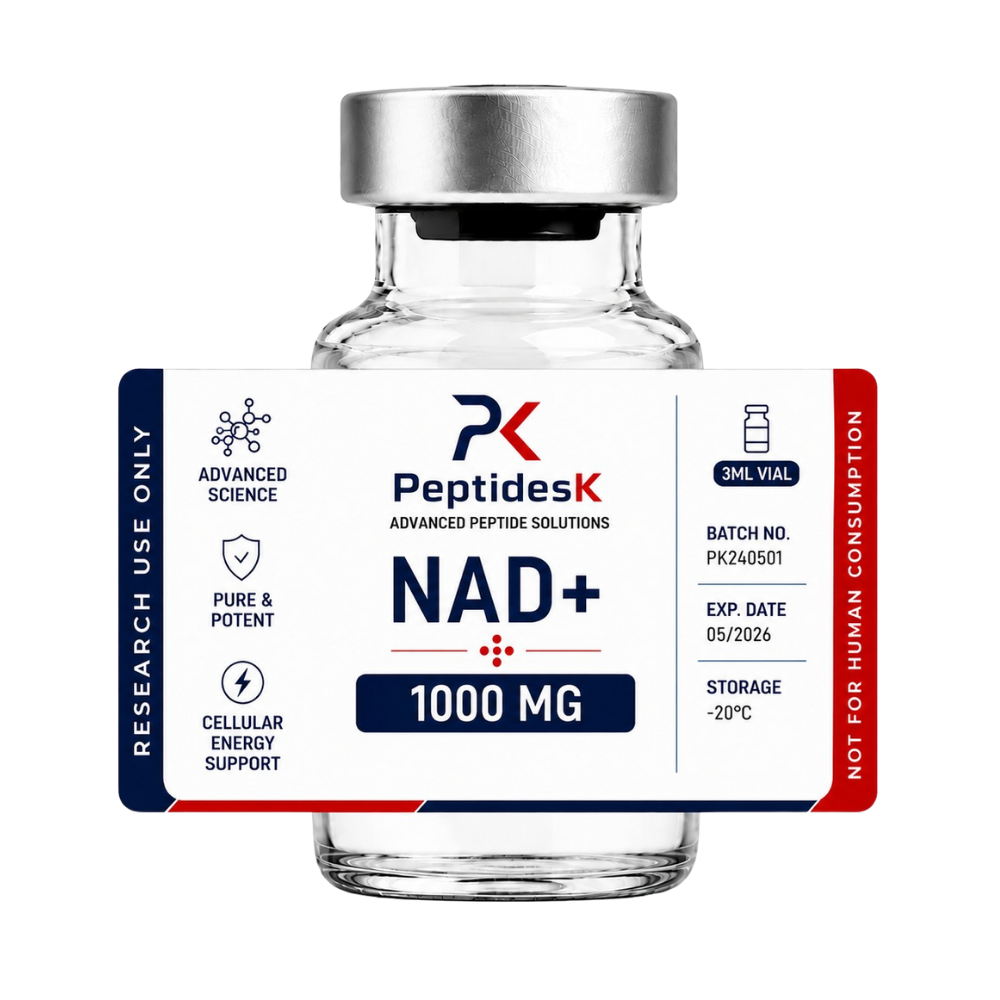
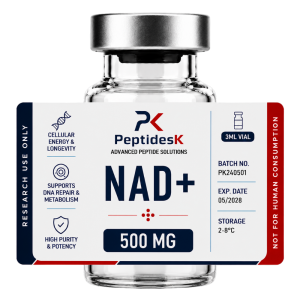
NAD+ 1000mg Core Specifications
Deep technical specification parameters optimized for integrating high-mass NAD+ into continuous, multi-well laboratory screening protocols.
| Research Parameter | Assay Benchmark Profile | Internal Catalog Link |
|---|---|---|
| Chemical Structural Class | Metabolic Coenzyme / Pyridine Nucleotide Base Configuration | High-Purity Series → |
| Molecular Weight | 663.4 Da (Oxidized free acid baseline) | |
| Purity Baseline | ≥ 98.0% via High-Performance SEC-HPLC | Anti-Aging & Longevity Series → |
| Assay Target | Sirtuin Deacetylation Recruitment & Mitochondrial Electron Transport Chain Optimization |
What Is NAD+? Function, Metabolism & Research
NAD+ (Nicotinamide Adenine Dinucleotide) is an essential oxido-reductase pyridine nucleotide coenzyme present in every living cell, functioning as a mandatory catalyst for cell survival, genomic stability, and mitochondrial respiration. Structurally comprising two covalently linked nucleotides joined through their phosphate groups, NAD+ exists primarily in its oxidized state, ready to accept electrons during metabolic breakdown loops. Unlike targeted peptide signaling molecules that bind to single surface receptors, NAD+ functions as a universal cellular engine driving fundamental pathways, including sirtuin (SIRT1-7) deacetylation, poly(ADP-ribose) polymerase (PARP) DNA repair cascades, and cyclic ADP-ribose synthase signaling. In contemporary biochemistry and longevity research, this high-yield NAD 1000mg vial configuration provides an optimal reference standard for exploring mitochondrial decay reversal, cellular energy restoration, and metabolic decline parameters without running into early compound depletion during extensive titration series. To review batch-specific analytical records, visit peptidesk.com.
NAD+ 1000mg Quick Specifications
| Technical Property | Laboratory Standard Specifications |
|---|---|
| Chemical Composition | Purified Oxido-Reductase Pyridine Nucleotide Coenzyme Layer |
| Active Core Payload | 1000mg Purified Crystalline Powder / Vial (High-Mass Target Setup) |
| Purity Baseline | ≥ 98.0% Pure Certified via High-Grade HPLC Assays |
| Primary Research Node | Mitochondrial ATP output tracking, sirtuin deacetylation, and chromatin strand repair tracking |
Research Compliance Notice: Materials listed as NAD+ 1000mg vial, NAD plus 1000mg are supplied strictly for in vitro laboratory profiling, cellular metabolism assays, and scientific research. They are strictly not approved for human clinical use, oral supplementation, or self-administration.
NAD+ Mechanism of Action: Cellular Energy, Redox & Sirtuins
Analyzing the biochemical NAD+ mechanism of action involves tracking how this central coenzyme balances cellular redox states while fueling critical enzymatic processes. How does NAD+ work inside cellular systems? NAD+ acts as a primary electron acceptor during glycolysis, fatty acid beta-oxidation, and the citric acid (TCA) cycle, converting to its reduced form (NADH). This electron loading feeds high-energy electrons directly into Complex I of the inner mitochondrial membrane respiratory chain, driving the proton gradient that fuels adenosine triphosphate (ATP) synthase. Beyond energy production, NAD+ serves as a consumed co-substrate for NAD+-dependent enzymes:
- Sirtuin Activation (SIRT1-7): NAD+ is consumed during sirtuin-mediated deacetylation of histones and transcription factors (such as PGC-1α and FOXO), turning on mitochondrial biogenesis, antioxidant defense systems, and metabolic homeostasis.
- Genomic Maintenance via PARP: Poly(ADP-ribose) polymerases rely on intracellular NAD+ pools to detect single-strand DNA breaks and coordinate nuclear repair machinery under oxidative stress conditions.
- Calcium Signaling Pools: CD38 and CD157 ecto-enzymes convert NAD+ into cyclic ADP-ribose (cADPR), regulating intracellular calcium fluxes vital for cellular communication.
NAD+ Core Pathways & Action Matrix
| Target Pathway | Observed Cellular Action | Primary Research Goal |
|---|---|---|
| Sirtuin Activation | Acts as a mandatory substrate for SIRT1 and SIRT3 enzymes, turning on cell survival pathways. | Mapping longevity gene transcriptomics in aging lines. |
| Mitochondrial Flux | Optimizes electron transport efficiency between Complex I and Complex IV inside cellular systems. | Measuring ATP generation changes in treated models. |
| Genomic Integrity | Supplies raw material fuel directly to PARP enzymes to facilitate cellular repair on altered DNA sheets. | Tracking cellular survival rates following oxidative shock. |
NAD+ and Longevity: What Does Research Show?
In modern anti-aging research and biogerontology publications, the correlation between intracellular NAD+ levels and age-related functional decline is widely documented. Scientific studies reveal that cellular NAD+ concentrations decline significantly with age—often dropping by up to 50% in middle-aged tissue models compared to youthful baselines. This depletion is driven by increased activity of NAD+-consuming enzymes like CD38, combined with reduced activity of the salvage pathway enzyme NAMPT (nicotinamide phosphoribosyltransferase).
Restoring cellular NAD+ pools in experimental models has been shown to reverse mitochondrial dysfunction, enhance oxidative stress resistance, and improve metabolic flexibility. By providing adequate coenzyme levels, researchers can activate SIRT1 and SIRT3 pathways, which promote mitochondrial biogenesis via PGC-1α activation and reduce nuclear DNA damage accumulation. Consequently, NAD+ longevity research focuses on measuring cell lifespan extension, muscular endurance preservation, and neuroprotective dynamics in aged tissue samples.
How Does NAD+ Compare to Other Anti-Aging Compounds?
To assist in protocol design, it is important to distinguish the broad metabolic coenzyme function of NAD 1000mg from alternative longevity peptides, telomere activators, and metabolic regulators available in our research collection:
| Research Compound | Mechanism of Action | Primary Laboratory Focus | Target Nodes | Compound Class |
|---|---|---|---|---|
| NAD+ 1000mg(This Product) | Sirtuin Enzyme Substrate | Mitochondrial respiration mapping, sirtuin deacetylation, and cellular energy restoration. | SIRT1-7 / Mitochondria | Purified Coenzyme |
| Epithalon 50mg | TERT Gene Promoter | Telomere extension mapping, chromatin epigenetic unfolding, and cellular lifespan tracking. | Nuclear DNA / TERT | Tetrapeptide (4-AA) |
| HGH Fragment | Lipolytic Pathway Trigger | Adipose tissue reduction mapping, isolated fat burning markers, and growth-independent research. | Beta-3 Adrenergic | 176-191 Segment |
| Semaglutide 20mg | Selective GLP-1R Agonism | Incretin pathway regulation, glucose-dependent insulin tracking, and selective satiety curve shifts. | GLP-1 Receptor | Acylated Peptide |
NAD+ COA, HPLC & Purity: What Should Researchers Check?
When sourcing ordering a NAD+ research compound for laboratory use, analytical quality verification is critical. Because pyridine nucleotides are sensitive to hygroscopic degradation, thermal stress, and light exposure, researchers must inspect key quality metrics before initiating experimental protocols:
- HPLC Assay Purity: High-Performance Liquid Chromatography reports must confirm a minimum baseline purity of ≥98.0%, verifying the absence of degraded breakdown products like nicotinamide or AMP.
- Mass Spectrometry Verification: Mass spectrometry (MS) analysis confirms the exact molecular mass and chemical identity of the oxidized coenzyme structure.
- Lot-Specific Certificate of Analysis (COA): A valid COA provides batch-level verification of heavy metal limits, residual solvent levels, and endo-toxin controls.
Analytical Verification & Lab Reports: Inspect our latest batch-specific HPLC purity charts, mass spectrometry results, and independent COA documents directly on our PeptidesK Third-Party Lab Testing Page.
Storage & Reconstitution Guidelines
- FREEZER (-20°C)
Lyophilized Coenzyme Powder: Store dry crystalline powder vials inside a laboratory freezer at -20°C to -80°C for long-term stability up to 24 months. Protect from light exposure. - TRANSIT RESILIENCE
Unreconstituted Powder: Highly resilient during transport; can endure ambient transit temperatures up to 25°C for up to 3 weeks. Return to freezer storage upon arrival. - REFRIGERATOR (2°C – 8°C)
Reconstituted Solution: Keep reconstituted liquid solutions under strict refrigeration between 2°C and 8°C. Exhaust active liquid within 7 to 10 days maximum. Do not refreeze liquid.
Step-by-Step Reconstitution Protocol for NAD+ 1000mg
- Temperature Adaptation: Allow the 1000mg vial to naturally reach room temperature equilibrium before removing the plastic security cap to prevent moisture condensation.
- Septum Sanitization: Clean the top rubber entry stopper using a fresh, sterile isopropyl alcohol wipe.
- Controlled Liquid Cascade: Draw your diluent (such as sterile bacteriostatic water or sterile normal saline) and slowly inject it down the internal glass wall to avoid mechanical shock.
- Gentle Dissolution: Do not shake or vortex aggressively. Gently roll the vial horizontally between your palms in concentric movements until the crystalline powder cake completely dissolves into a clear liquid.
To buy NAD+ 1000mg or source high-purity research compounds backed by certified batch HPLC reports and fast domestic shipping, order directly from peptidesk.com.
Shop by Goal Categories
Explore our high-purity research compounds and peptides categorized by primary experimental targets and research goals:
| Goal Category | Primary Research Focus |
|---|---|
| Anti-Aging & Longevity Peptides → | Cellular renewal, telomere maintenance, and anti-senescence research models. |
| Fat Loss & Metabolic Peptides → | Incretin mimetics, lipolysis acceleration, and metabolic flexibility profiling. |
| Muscle Growth & Building Peptides → | Anabolic signaling, GH secretagogues, and protein synthesis acceleration. |
| Recovery & Healing Peptides → | Soft tissue repair, tendon-to-bone recovery, and systemic cell migration. |
| Focus & Cognitive Peptides → | Nootropic signaling, neuroprotection, and synaptic plasticity assays. |
There are no reviews yet.