
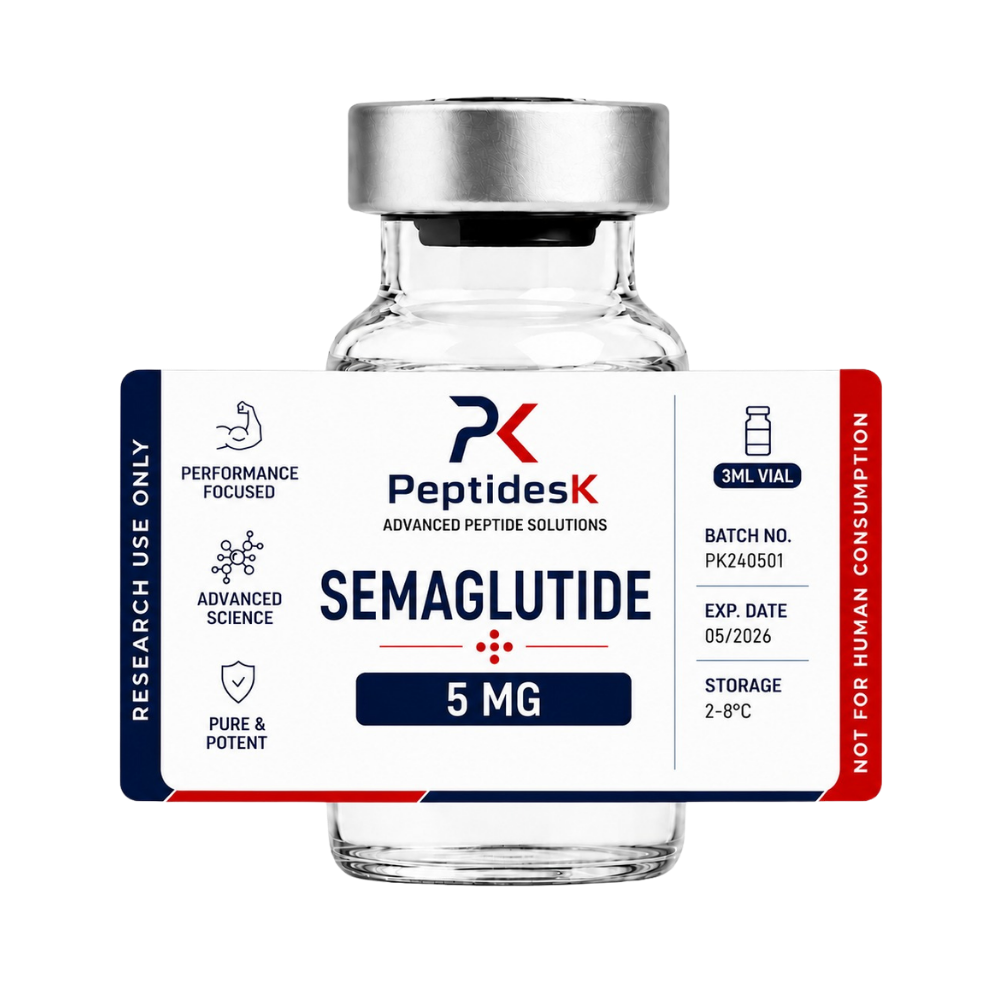
Description
Semaglutide 5mg Core Specifications
Deep technical specification parameters optimized for integrating 5mg Semaglutide into focused, micro-scale laboratory screening protocols.
| Research Parameter | Assay Benchmark Profile | Internal Catalog Link |
|---|---|---|
| Sequence Blueprint | Modified GLP-1 Analogue (31-AA Backbone with a structural spacer and C18 diacid chain) | High-Purity Series → |
| Molecular Mass | 4113.4 Da (Engineered for high albumin binding and enzymatic resistance) | |
| Purity Baseline | ≥ 98.0% via High-Performance SEC-HPLC | Metabolic Series → |
| Assay Target | Highly Selective GLP-1 Receptor Binding (Sustained cAMP Induction Loop) |
What is Semaglutide 5mg & How Does It Work?
Semaglutide 5mg is a precision-engineered synthetic polypeptide that functions as a highly selective, long-acting agonist for the human glucagon-like peptide-1 receptor (GLP-1R). Structurally derived from native incretin hormones, this 31-amino-acid acylated sequence features an amino acid substitution at position 8 (alanine to alpha-aminobutyric acid) and a C18 lipophilic diacid chain modification. These strategic structural alterations grant the molecule strong resistance against rapid enzymatic cleavage by dipeptidyl peptidase-4 (DPP-4), extending its biological half-life significantly. In contemporary endocrinology and cellular research, this 5mg vial format represents an ideal entry-level baseline. It provides research laboratories with an economical, manageable payload for initial dose-response profiling, preliminary receptor binding assays, and short-term cell-line calibrations without the risk of reconstituted liquid degradation or material waste. To inspect verified analytical documentation, visit peptidesk.com.
Semaglutide 5mg Quick Specifications
| Technical Property | Laboratory Standard Specifications |
|---|---|
| Chemical Structure | Modified 31 Amino Acid Peptide Chain (Acylated Incretin Mimetic) |
| Active Core Payload | 5mg Purified Crystalline Powder / Vial (Starter Calibration Setup) |
| Purity Baseline | ≥ 98.0% Pure Certified via HPLC & Mass Spectrometry |
| Primary Target Node | Selective GLP-1R activation, cellular adenylate cyclase response, & transit deceleration |
Research Compliance Notice: Materials offered as semaglutide research peptide online or semaglutide 5mg for sale are supplied strictly for in vitro laboratory profiling, metabolic research, and cellular assays. They are strictly not approved for human therapeutic use, clinical administration, or self-medication.
Semaglutide Mechanism of Action: How GLP-1 Receptor Activation Works
Understanding the cellular semaglutide mechanism of action involves tracking how selective GLP-1 receptor activation regulates downstream biological signaling. When introduced to target cell cultures, the peptide binds cleanly into the extracellular GLP-1 receptor pocket on pancreatic beta cells and central hypothalamic neurons. This binding interaction prompts the immediate activation of intracellular adenylate cyclase enzymes, driving a continuous and stable accumulation of cyclic adenosine monophosphate (cAMP).
The resulting rise in cAMP levels stimulates protein kinase A (PKA) and exchange proteins directly activated by cAMP (EPAC), which together coordinate glucose-dependent insulin gene transcription and exocytosis. Importantly, because this pathway is strictly glucose-dependent, insulin release drops as extracellular glucose levels normalize, preventing uncalibrated hypoglycemia in test models. Furthermore, receptor engagement across gastrointestinal tissue models signals central vagal nerve pathways to delay gastric emptying rates, providing researchers with a clear model for evaluating postprandial nutrient transit curves and satiety signaling networks.
Semaglutide Core Pathways & Action Matrix
| Target Pathway | Observed Cellular Action | Primary Research Goal |
|---|---|---|
| Incretin Activation | Binds selectively to GLP-1 receptors to stimulate continuous internal cyclic AMP flux. | Quantifying cell signaling balance in isolated models. |
| Adipocyte Remodeling | Suppresses downstream fat-building vectors near pre-adipocyte structural boundaries. | Measuring lipid accumulation reduction rates. |
| Transit Deceleration | Measures real-time delay curves in nutrient transit velocities natively across gastric models. | Establishing long-term metabolic digestive baselines. |
Semaglutide Weight Loss Results & Clinical Timeline
In clinical trial literature evaluating semaglutide for weight loss (such as the landmark STEP clinical trials), researchers have documented progressive, dose-dependent reductions in total body mass, visceral fat deposits, and systemic metabolic risk factors. During early titration phases (Weeks 1 to 4), test models display initial gastrointestinal transit deceleration and appetite suppression, yielding early weight loss averages between 2% and 4% of baseline body mass.
As trial protocols reach steady-state maintenance levels around Weeks 12 to 16, cumulative mass reduction accelerates significantly, reaching average losses of 8% to 10%. Over extended observation windows (24 to 68 weeks), high-dose cohort data demonstrates sustained total body weight reductions averaging 15% to 18%. Utilizing a 5mg vial setup provides an exceptional entry-level configuration for pilot research rows. This smaller footprint allows laboratories to conduct initial dose-escalation studies and baseline calibrations while preserving fresh liquid stability across short-term test cycles.
Semaglutide vs Ozempic: What’s the Difference?
When reviewing scientific literature surrounding semaglutide vs ozempic, setting a clear distinction between finished commercial pharmaceuticals and unformulated analytical research peptides is essential. While brand-name medications like Ozempic and Wegovy contain the active peptide sequence, they are formulated with specific clinical buffers, preservers, and proprietary delivery pens designed exclusively for human medical treatment.
| Comparison Attribute | Ozempic / Wegovy | Semaglutide 5mg Research Peptide |
|---|---|---|
| Active Sequence | Semaglutide active chemical sequence. | Identical 31-amino acid acylated sequence. |
| Format & Delivery | Pre-filled clinical single-dose autoinjector pens. | Freeze-dried crystalline powder vial (5mg). |
| Application Field | Clinical prescription therapy for T2D & obesity. | In vitro research, receptor binding & cellular assays. |
In contrast, high-purity 5mg lyophilized research vials contain pure crystalline peptide powder free from added excipients or clinical anti-bacterial additives. This unformulated state gives laboratory investigators total control over reconstitution media, buffer strength, and precise molar concentration calibrations. Standardized research peptides are strictly intended for laboratory experimentation and baseline assay development rather than clinical prescription use.
Oral Semaglutide vs Injectable Semaglutide
In comparative endocrine studies, examining injectable lyophilized peptides against oral small-molecule GLP-1 mimetics highlights major differences in pharmacokinetics and cellular bioavailability. Injectable peptide research setups—such as reconstituted 5mg vials—deliver direct, highly predictable systemic bioavailability into target sample media, allowing researchers to calculate exact molar interactions without gastrointestinal degradation variables.
Conversely, oral GLP-1 research models (such as oral semaglutide formulations or small-molecule alternatives like Orforglipron) rely on absorption enhancers like Salcaprozate Sodium (SNAC) to temporarily raise localized gastric pH and protect the peptide structure from stomach acid breakdown. While oral delivery research provides insights into non-invasive transit modeling, injectable lyophilized formats remain the primary standard for high-precision quantitative receptor binding assays due to their complete resistance to digestive enzyme interference.
Semaglutide 5mg vs Tirzepatide Stack for Weight Loss
Evaluating selective single-receptor agonists alongside dual and triple incretin mimetics provides critical insights into metabolic signaling depth. While Semaglutide operates exclusively as a selective GLP-1 receptor agonist, dual-action compounds like Tirzepatide target both GLP-1 and GIP (Glucose-Dependent Insulinotropic Polypeptide) receptors simultaneously. This dual agonism enhances lipolysis acceleration and achieves higher average weight loss percentages in clinical trials.
Furthermore, next-generation triple agonists such as Retatrutide incorporate direct Glucagon receptor (GCGR) activity alongside GIP and GLP-1 activation, significantly elevating basal energy expenditure and liver fat oxidation. Despite the higher potency of multi-receptor agents, standalone selective GLP-1 mimetics like Semaglutide 5mg remain indispensable control tools in laboratory research, enabling scientists to isolate GLP-1 specific pathway mechanics without interference from overlapping incretin cascades.
Semaglutide 5mg Side Effects & Facial Fat Loss (Semaglutide Face)
Documenting semaglutide side effects is an essential requirement in laboratory trial logging and risk analysis. In clinical and preclinical literature, the most frequently observed secondary reactions are gastrointestinal in nature, including transient mild-to-moderate nausea, vomiting, diarrhea, constipation, and localized abdominal discomfort. These reactions occur primarily during early dose-escalation steps and typically resolve as tissue receptor tolerance develops over time.
Another widely documented physical phenomenon is rapid facial subcutaneous fat loss, often referred to in clinical literature as Semaglutide Face. Because GLP-1 receptor activation drives rapid, systemic adipose tissue reduction, subjects undergoing rapid mass loss frequently experience a depletion of deep facial fat pads. This loss of structural facial volume can result in hollowed cheeks and increased skin laxity. In experimental design, implementing gradual, step-wise dose escalation schedules helps mitigate rapid subcutaneous volume shifts and improves overall gastrointestinal tolerability across test cohorts.
Storage & Reconstitution Guidelines
- FREEZER (-20°C)
Lyophilized Powder: Store unopened dry powder vials inside a laboratory freezer at -20°C to -80°C for long-term stability up to 24 months. This protects the acylated sequence against degradation. - TRANSIT RESILIENCE
Unreconstituted Powder: Highly stable during shipping; can withstand ambient transit temperatures up to 25°C for up to 3 weeks. Return to freezer storage upon receipt. - REFRIGERATOR (2°C – 8°C)
Reconstituted Solution: Store liquid solutions under strict refrigeration between 2°C and 8°C. Exhaust active liquid within 10 to 14 days maximum. Do not refreeze liquid.
Step-by-Step Reconstitution Protocol for Semaglutide 5mg
To dissolve your 5mg dry crystalline powder cake into a pristine, stable fluid layer without shearing delicate acylated peptide chains, follow this standardized laboratory protocol:
- Temperature Adaptation: Allow the 5mg vial to naturally reach ambient room temperature equilibrium before removing the plastic flip-off seal to prevent moisture condensation.
- Septum Sanitization: Thoroughly cleanse the upper rubber entry stopper using a fresh, sterile isopropyl alcohol wipe.
- Controlled Liquid Cascade: Draw your laboratory diluent (such as sterile bacteriostatic water) and slowly inject it down the internal glass envelope wall. Allow the fluid to stream down gently rather than spraying directly onto the powder cake.
- Gentle Dissolution: Do not shake, vortex, or agitate aggressively. Mechanical friction easily breaks acylated chains. Instead, roll the vial horizontally between your palms in slow, concentric movements until the white cake completely dissolves into a crystal-clear liquid.
Analytical Verification & Lab Reports: Inspect our latest batch-specific HPLC purity charts, mass spectrometry results, and third-party lab testing reports directly on our PeptidesK Third-Party Lab Testing Page.
To buy semaglutide 5mg or source verified research compounds backed by certified batch HPLC reports and fast domestic shipping, order directly from peptidesk.com.
Shop by Goal Categories
Explore our high-purity research compounds and peptides categorized by primary experimental targets and research goals:
| Goal Category | Primary Research Focus |
|---|---|
| Anti-Aging & Longevity Peptides → | Cellular renewal, telomere maintenance, and anti-senescence research models. |
| Fat Loss & Metabolic Peptides → | Incretin mimetics, lipolysis acceleration, and metabolic flexibility profiling. |
| Muscle Growth & Building Peptides → | Anabolic signaling, GH secretagogues, and protein synthesis acceleration. |
| Recovery & Healing Peptides → | Soft tissue repair, tendon-to-bone recovery, and systemic cell migration. |
| Focus & Cognitive Peptides → | Nootropic signaling, neuroprotection, and synaptic plasticity assays. |

There are no reviews yet.