
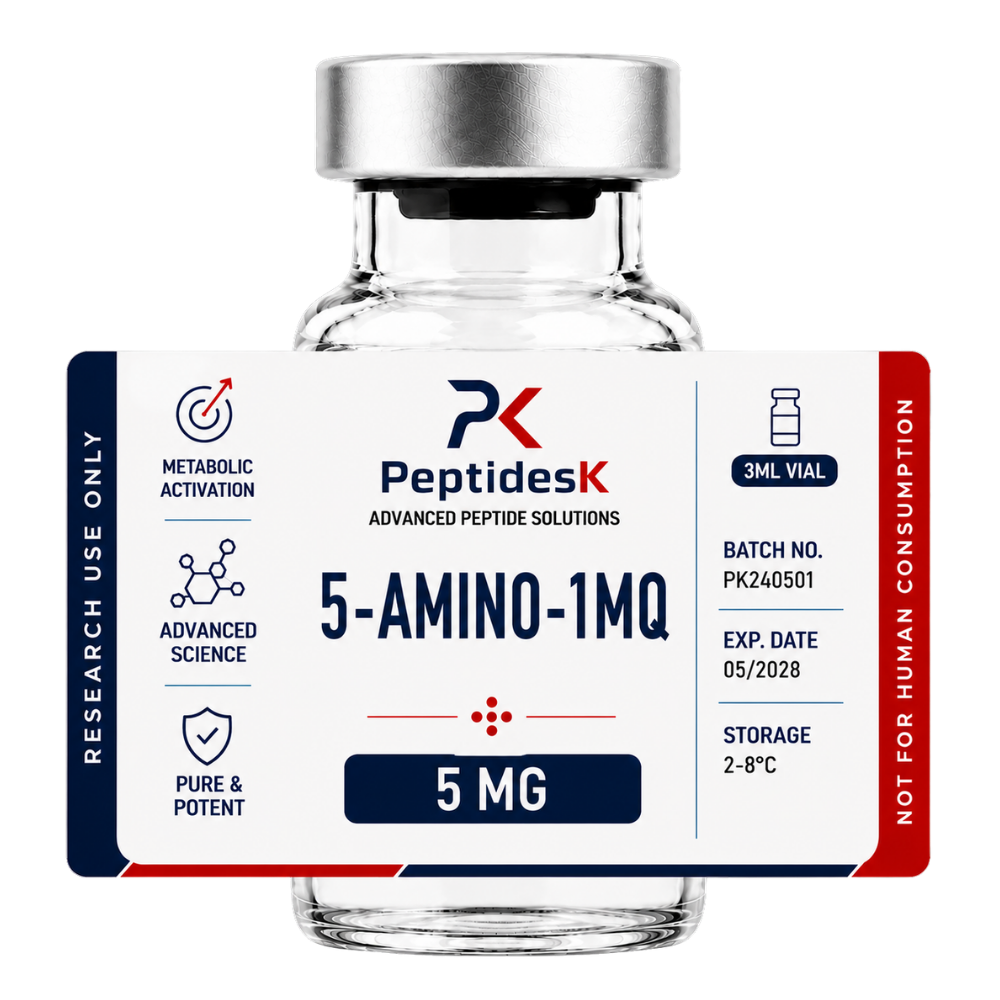
Description
5-Amino-1MQ 5mg Core Specifications
Deep technical specification parameters optimized for integrating 5mg 5-Amino-1MQ into focused, multi-well laboratory screening protocols.
| Research Parameter | Assay Benchmark Profile | Internal Catalog Link |
|---|---|---|
| Chemical Structural Class | 5-Amino-1-methylquinolin-1-ium (Aminoquinoline Derivative Small Molecule) | High-Purity Series → |
| Molecular Weight | 159.2 Da (Ultra-low mass, cell-permeable non-peptide architecture) | |
| Purity Baseline | ≥ 98.0% via High-Performance SEC-HPLC | Metabolic Suport – Fat Loss Peptides → |
| Assay Target | Selective Intracellular Nicotinamide N-Methyltransferase (NNMT) Inhibition |
What Is 5-Amino-1MQ & How Does It Work?
5-Amino-1MQ (chemically designated as 5-amino-1-methylquinolinium chloride or simply 5A1MQ) is a cell-permeable small molecule derivative engineered to function as a selective inhibitor of Nicotinamide N-methyltransferase (NNMT). NNMT is a key cytosolic enzyme expressed heavily in fat tissue that acts as a central regulator of cellular energy balance. Unlike classic peptide hormones that bind to cell surface receptors, the 5-Amino-1MQ peptide alternative enters cells directly to modify intracellular metabolism.
In analytical laboratories, this high-purity 5-Amino-1MQ 5mg vial serves as a premier reference standard for studying 5-Amino-1MQ fat loss research and cellular energy regulation. By inhibiting NNMT, the compound prevents the wasteful consumption of methyl donors and directs nicotinamide back into active metabolic pathways. To review verified batch documentation and third-party testing for this product, visit peptidesk.com.
5-Amino-1MQ 5mg Quick Specifications
| Technical Property | Laboratory Standard Specifications |
|---|---|
| Chemical Composition | Cell-Permeable Small Molecule Aminoquinoline Salt |
| Active Core Payload | 5mg Purified Crystalline Powder / Vial (Micro-Scale Calibration Setup) |
| Purity Baseline | ≥ 98.0% Pure Certified via High-Grade HPLC Assays |
| Primary Research Focus | Direct cytosolic NNMT inactivation, intracellular NAD+ level optimization, and sirtuin pathway conservation |
Research Compliance Notice: Products supplied as 5-Amino-1MQ research grade standards are provided strictly for in vitro laboratory profiling, cellular assays, and scientific testing. They are strictly not approved for human clinical administration, medical treatment, or personal self-medication.
How Does 5-Amino-1MQ Work in Laboratory Assays?
Understanding the cellular impact of an NNMT inhibitor peptide alternative like 5-Amino-1MQ involves tracking its effect on intracellular coenzyme pools. When NNMT is overactive in fat cells, it methylates nicotinamide into 1-methylnicotinamide, depleting S-adenosylmethionine (SAM) and draining the substrate needed to generate NAD+.
By competitively blocking the active catalytic site of NNMT, 5-Amino-1MQ alters cellular energy dynamics through three main pathways:
- NAD+ Salvage Pathway Promotion: Preventing nicotinamide methylation redirects free nicotinamide into the NAD+ salvage pathway, increasing intracellular NAD+ availability.
- SIRT1 Activation: Higher NAD+ levels activate sirtuin-1 (SIRT1) enzymes, driving mitochondrial biogenesis and fatty acid oxidation in 5-Amino-1MQ cellular metabolism studies.
- Inhibition of Lipogenesis: Blocking NNMT slows down fat storage mechanisms in 5-Amino-1MQ adipose tissue models, encouraging cells to burn energy rather than accumulate lipids.
5-Amino-1MQ Core Pathways & Action Matrix
| Target Pathway | Observed Cellular Action | Primary Research Goal |
|---|---|---|
| NNMT Enzyme Blocking | Inactivates cytosolic Nicotinamide N-methyltransferase to halt 1-methylnicotinamide accumulation. | Quantifying lipogenesis drop curves in fat cell lines. |
| NAD+ Conservation | Redirects nicotinamide parameters back into the NAD+ salvage pathway loop to optimize raw fuel pools. | Measuring internal ATP output changes in aging models. |
| SIRT1 Pathway Sync | Elevates available NAD+ coenzymes to trigger downstream sirtuin-dependent metabolic speed adjustments. | Tracking high-yield cellular energy kinetics under stress. |
5-Amino-1MQ Research Applications & Metabolic Impact
In modern biochemistry, metabolic profiling, and longevity studies, 5-Amino-1MQ metabolic research focuses heavily on reversing metabolic slowdowns caused by NNMT overactivation. Elevated NNMT levels are strongly correlated with obesity, metabolic dysfunction, and reduced cellular respiration. By blocking this enzyme, researchers can observe significant increases in baseline metabolic rate without altering food intake or relying on central nervous system stimulants.
Key experimental areas for NNMT metabolic research include:
- 5-Amino-1MQ NAD+ Regulation: Measuring real-time increases in intracellular NAD+ pools and evaluating the downstream activation of sirtuin gene networks.
- 5-Amino-1MQ Fat Metabolism: Tracking the rate of fatty acid oxidation and measuring reductions in adipocyte cell size in culture assays.
- NNMT Metabolic Health: Exploring how enzyme suppression impacts insulin sensitivity and mitochondrial energy production in metabolic disease models.
How Does 5-Amino-1MQ Compare to Other Research Compounds?
To assist in experimental coordination, it is helpful to compare the intracellular enzyme-blocking mechanism of 5-Amino-1MQ against alternative receptor agonists, lipolytic fragments, and direct coenzymes available in our catalog:
| Research Compound | Mechanism of Action | Primary Laboratory Focus | Target Nodes | Compound Class |
|---|---|---|---|---|
| 5-Amino-1MQ 5mg(This Product) | Selective NNMT Inhibition | Intracellular NAD+ salvage up-regulation, adipocyte lipogenesis blocking, and sirtuin pathway tracking. | Cytosolic NNMT | Small Molecule |
| Retatrutide 10mg | Triple Incretin Agonism | GCGR, GIPR, and GLP-1R sync profiling, multi-pathway surface loop saturation, and intensive lipids oxidation. | GIPR/GLP-1R/GCGR | Modified Peptide |
| HGH Fragment | Selective Beta-3 Agonism | Isolated fat tissue breakdown mapping, growth-independent lipid clearance, and non-glycemic metabolic tracking. | Beta-3 Adrenergic | Truncated Peptide |
| NAD+ 1000mg | Sirtuin Enzyme Substrate | Mitochondrial respiration mapping, direct sirtuin deacetylation substrate fuel, and cellular energy restoration. | SIRT1-7 / Mitochondria | Purified Coenzyme |
Storage & Reconstitution Guidelines for 5-Amino-1MQ
Maintaining proper storage parameters is essential to protect the aminoquinoline salt structure of 5-Amino-1MQ from degradation. Adhering to temperature guidelines ensures consistent solution concentration and reliable analytical baselines throughout testing:
- FREEZER (-20°C)
Unopened Lyophilized Powder: Store dry crystalline powder vials in a laboratory freezer at -20°C to -80°C for long-term stability up to 24 months. Protect from direct light. - TRANSIT RESILIENCE
Unmixed Powder: Highly stable during transit; can handle ambient shipping temperatures up to 25°C for up to 4 weeks. Place in freezer storage upon receipt. - REFRIGERATOR (2°C – 8°C)
Reconstituted Liquid: Once reconstituted using a suitable laboratory solvent (such as sterile bacteriostatic water or a mild DMSO dilution), store under refrigeration between 2°C and 8°C. Exhaust active liquid within 21 days maximum. Do not refreeze liquid.
Step-by-Step Reconstitution Protocol
- Temperature Adaptation: Allow the 5mg vial to reach room temperature naturally before opening the plastic cap to prevent moisture condensation.
- Septum Sanitization: Wipe the upper rubber entry stopper thoroughly using a fresh, sterile isopropyl alcohol swab.
- Controlled Liquid Addition: Draw your laboratory diluent and slowly inject 1ml down the internal glass wall. Let the liquid stream down gently rather than spraying directly onto the powder cake.
- Gentle Dissolution: While small molecules resist mechanical shearing better than long peptides, gentle handling ensures complete dissolution. Roll the vial horizontally between your palms until the powder fully dissolves into a crystal-clear liquid.
5-Amino-1MQ Purity, Price & Buying Online in the USA
When preparing to buy 5-Amino-1MQ USA stock or comparing 5-Amino-1MQ price options online, verifying third-party analytical quality is critical. Low-grade small molecules can contain unreacted synthesis intermediates or residual solvents that interfere with cell assays and yield inaccurate data.
Every batch of our 5 amino 1 mq inventory undergoes strict High-Performance Liquid Chromatography (HPLC) testing to confirm a 5-Amino-1MQ 99% purity baseline (≥98.0% minimum threshold). To check batch reports or order 5-Amino-1MQ for sale for qualified academic or industrial research, place your order directly through peptidesk.com.
Analytical Verification & Lab Reports: Inspect our latest batch-specific HPLC purity charts, mass spectrometry results, and independent COA documents directly on our PeptidesK Third-Party Lab Testing Page.
To buy 5-Amino-1MQ 5mg vials backed by independent batch testing and fast USA domestic delivery, visit peptidesk.com.
Shop by Goal Categories
Explore our high-purity research compounds and peptides categorized by primary experimental targets and research goals:
| Goal Category | Primary Research Focus |
|---|---|
| Anti-Aging & Longevity Peptides → | Cellular renewal, telomere maintenance, and anti-senescence research models. |
| Fat Loss & Metabolic Peptides → | Incretin mimetics, lipolysis acceleration, and metabolic flexibility profiling. |
| Muscle Growth & Building Peptides → | Anabolic signaling, GH secretagogues, and protein synthesis acceleration. |
| Recovery & Healing Peptides → | Soft tissue repair, tendon-to-bone recovery, and systemic cell migration. |
| Focus & Cognitive Peptides → | Nootropic signaling, neuroprotection, and synaptic plasticity assays. |

There are no reviews yet.