
Description
Sermorelin 5mg Core Specifications
Deep technical specification parameters optimized for integrating high-purity Sermorelin into focused cellular growth and longevity rows.
| Research Parameter | Assay Benchmark Profile | Internal Catalog Link |
|---|---|---|
| Sequence Blueprint | GRF 1-29 Core Segment (Functional Shortened Amino Acid Layout) | High-Purity Series → |
| Molecular Weight | 3357.9 Da (Stabilized short-chain structure) | |
| Purity Baseline | ≥ 98.0% via High-Performance SEC-HPLC | Muscle Growth Compounds → |
| Assay Target | Pituitary GHRH Receptor Agonism & Pulsatile Release Mapping |
What is Sermorelin Peptide & How Does it Work?
Sermorelin is a highly purified synthetic peptide analogue that structurally mirrors the first 29 amino acids of endogenous Growth Hormone-Releasing Hormone (GHRH). This specific shortened segment contains the full functional capability required to bind and activate pituitary receptor sites. Unlike full-length native hormones that can overwhelm cell environments, this compound isolates the natural pulsatile release mechanisms of the somatotropic axis. In contemporary endocrinology research, this 5mg format serves as a stable model for exploring tissue regeneration, cellular nitrogen retention, and muscle architecture adjustments without facing the receptor burnout linked to uncalibrated growth agent lines. Researchers evaluating authentic reference materials can review analytical documentation on peptidesk.com.
Sermorelin 5mg Quick Specifications
| Technical Property | Laboratory Standard Specifications |
|---|---|
| Chemical Structure | Truncated 29 Amino Acid GHRH Analogue Core |
| Active Core Payload | 5mg Purified Crystalline Powder / Vial (Precision Calibration Format) |
| Purity Baseline | ≥ 98.0% Pure Certified via HPLC Testing |
| Primary Research Focus | Pituitary GHRHr binding, endogenous pulsatile flux, and collagen type I synthesis speed |
Research Compliance Notice: Materials listed as sermorelin research peptide for sale are supplied strictly for in vitro laboratory profiling, cellular assay design, and scientific research. They are not supplied for human therapeutic use, medical prescriptions, or self-administration.
How Does Sermorelin Work in Laboratory Assays?
Analyzing how sermorelin works requires understanding its GHRH mechanism. The peptide operates by docking selectively with GHRH receptors on pituitary somatotrof cells, mimicking natural signaling cascades cleanly. This specific target alignment turns on the adenylate cyclase engine, driving cyclic AMP (cAMP) accumulation and forcing a healthy, natural wave of growth hormone transcription. Because this interaction loop respects internal feedback blocks, researchers can isolate pure growth factor pathways and observe systemic tissue modeling metrics, completely free from unguided cellular proliferation noise.
Sermorelin Research Applications
In analytical endocrinology and longevity-focused transcriptomic publications, this research compound is heavily evaluated for its ability to optimize cell life metrics and trigger structural tissue remodeling. Investigators utilize this 5mg presentation format to build precise concentration responses and observe the upregulation of downstream insulin-like growth factor (sermorelin IGF-1) tracks inside functional cell lines. The 5mg calibration setup is highly favored for pilot micro-scale screening boards, allowing researchers to fully exhaust reconstituted fluids well within their peak stability windows to prevent artifact data noise.
Sermorelin Core Pathways & Action Matrix
| Target Pathway | Observed Cellular Action | Primary Research Goal |
|---|---|---|
| Somatotrof Agonism | Binds cleanly to pituitary receptors, stimulating safe growth signaling cascades. | Quantifying natural pulsatile growth hormone wave patterns. |
| Matrix Upregulation | Triggers downstream growth tracks to accelerate protein synthesis and collagen deposition. | Mapping skeletal muscle fiber and connective tissue remodeling lines. |
| Longevity Kinetics | Supports natural cellular repair loops, improving chromatin epigenetic stability metrics. | Investigating lifespan expansion parameters in test models. |
Step-by-Step Mechanism of Action
When introduced to target sample research media, the sequence coordinates deep cellular adaptations through a highly standardized path:
- Receptor Alignment: The 29 amino acid sequence aligns smoothly across specific GHRH cell surface receptors on somatotrof cell boundaries.
- Intracellular Cascading: Activates the adenylate cyclase enzyme, prompting immediate internal cyclic AMP (cAMP) accumulation flux.
- Hormone Mobilization: Triggers calcium-dependent channels, signaling the cell matrix to release stored endogenous growth hormone rows.
- Homeostatic Equilibrium: The cell lines demonstrate an optimized shift in nitrogen retention and tissue remodeling while keeping baseline glucose paths undisturbed.
Sermorelin for Men: Research, GH Signaling & What the Evidence Shows
Scientific interest in male endocrinology models focuses heavily on how sermorelin growth hormone secretagogues interact with age-related endocrine decline. As male test subjects age, somatopause causes a progressive decrease in nocturnal growth hormone pulses, leading to reduced lean muscle tissue, decreased bone mineral density, and elevated visceral fat accumulation. Research into sermorelin for men examines how restoring endogenous secretion patterns compares to exogenous hormone replacement.
Studies evaluating sermorelin GH levels demonstrate that activating pituitary somatotrofs preserves the natural pulsatile release curve of growth hormone rather than forcing unnatural continuous elevation. This distinction is critical in clinical trial design, as pulsatile sermorelin GH signaling maintains peripheral insulin sensitivity and prevents the downregulation of pituitary GHRH receptors. Furthermore, research records show corresponding increases in circulating IGF-1 markers, supporting nitrogen retention and myofibrillar protein synthesis in lean muscle tissue models without altering gonadotropin pathways or disrupting test baseline markers.
Sermorelin & Healthy Aging: What Human Research Actually Shows
In the field of anti-aging research, investigating sermorelin anti aging mechanisms provides valuable insights into cellular repair and tissue rejuvenation. Rather than acting as a direct tissue growth factor, the peptide works through central neuroendocrine axes to promote systemic homeostasis. Trials focusing on sermorelin healthy aging markers explore its impact on dermal collagen density, body composition, and cellular turnover rates across aging tissue models.
Human research examining sermorelin age-related protocols indicates that regular secretagogue signaling helps maintain physiological cellular repair mechanisms. Clinical evaluations report improvements in skin elasticity via enhanced collagen type I and III synthesis, reduction in subcutaneous fat mass, and better metabolic flexibility. Additionally, studies exploring sermorelin peptide sleep architecture show a notable increase in deep, slow-wave (Stage 3 and Stage 4) non-REM sleep phases. Because natural somatotropin release occurs predominantly during deep sleep cycles, improving sermorelin sleep quality creates a positive feedback loop that further enhances biological nighttime cellular repair and tissue recovery.
Sermorelin vs CJC-1295: GHRH Analogs Compared
When selecting secretagogue analogues for experimental protocols, researchers frequently compare Sermorelin against CJC-1295. While both agents belong to the GHRH agonist class and bind to identical pituitary somatotrof receptors, their pharmacokinetic profiles and plasma half-lives differ substantially due to structural modifications.
| Characteristic | Sermorelin Acetate | CJC-1295 (No DAC / DAC) |
|---|---|---|
| Amino Acid Length | 29 Amino Acids (Truncated GHRH core) | 29 Amino Acids (Modified sequence) |
| Plasma Half-Life | Short (~10–12 minutes) | Extended (30 mins without DAC / 6–8 days with DAC) |
| Secretion Pattern | Natural, sharp, physiologic pulses | Sustained, elevated hormone baseline (DAC) |
Sermorelin features a short half-life of approximately 10 to 12 minutes, mimicking natural physiological release spikes without causing continuous receptor engagement. Conversely, CJC-1295 with DAC binds to blood proteins, extending its half-life for several days. Researchers seeking to replicate natural, physiological growth hormone spikes generally prefer short-acting GHRH mimetics, whereas extended-duration studies may utilize long-acting CJC-1295 formulations.
Sermorelin vs HGH: What’s the Difference?
A primary point of evaluation in longevity research is contrasting pituitary secretagogues against exogenous recombinant human growth hormone (sermorelin vs HGH). Understanding this distinction is fundamental for setting up controlled laboratory models and evaluating endocrine safety profiles.
| Feature | Sermorelin Peptide Therapy | Exogenous HGH (Somatropin) |
|---|---|---|
| Mechanism | Stimulates pituitary to produce endogenous GH | Directly introduces synthetic 191-AA hormone |
| Negative Feedback Loop | Preserved (Somatostatin stops excess release) | Bypassed (Suppresses natural pituitary output) |
| Side Effect Risk | Lower risk of tachyphylaxis and organomegaly | Higher risk of insulin resistance and fluid retention |
Exogenous HGH bypasses the body’s native regulatory controls, directly introducing the 191-amino acid protein into systemic circulation. This direct elevation can shut down natural pituitary production via somatostatin feedback loops and increase risks of joint swelling, insulin resistance, and organomegaly. In contrast, sermorelin growth hormone peptide protocols trigger the pituitary to release its own stored somatotropin. This process preserves internal feedback loops, allowing somatostatin to halt excess secretion if hormone levels rise too high, making it a safer candidate for long-term physiological research.
Sermorelin Dosage & Administration Protocols
Determining appropriate laboratory dosing parameters requires reviewing standardized research models. In trial settings, sermorelin dosage for men and sermorelin dosage for women are calibrated based on target body mass and study objectives.
- Standard Research Dosing Ranges: Experimental protocols typically utilize 100mcg to 500mcg per single administration, introduced via subcutaneous sermorelin injection pathways.
- Timing Protocol: Assays are overwhelmingly scheduled immediately prior to simulated nocturnal sleep windows to align with natural physiological circadian GH peaks.
- Combination Profiles: In comparative trials such as sermorelin vs ipamorelin for men, researchers frequently co-administer GHRH analogues with GHRP compounds (like Ipamorelin) to analyze synergistic dual-receptor pituitary activation.
Sermorelin Side Effects & Safety Profile
Evaluating sermorelin safety and logging potential adverse reactions is vital for maintaining accurate study controls. While secretagogues carry a lower risk profile than direct hormone administration, researchers should monitor test models for known side effects.
- Injection Site Reactions: Temporary localized erythema, mild swelling, or slight itching at the sermorelin injections site are the most frequently recorded minor reactions.
- Systemic Side Effects: Transient sermorelin injection side effects may include mild flushing, light dizziness, temporary tightness in the chest, or minor headaches shortly after administration.
- Long-Term Considerations: When analyzing sermorelin long term side effects, evidence indicates minimal risk of pituitary gland burnout or permanent endocrine axis suppression, provided protocols allow for periodic wash-out periods to prevent receptor desensitization.
How Does Sermorelin Compare to Other Peptides?
To assist in protocol coordination, it is essential to differentiate the endogenous pituitary secretion focus of Sermorelin 5mg from alternative selective lipolytic fragments, telomere promoters, or multi-receptor incretin architectures available in our collection. While alternative compounds isolate fat reduction tracks or pancreatic signaling networks exclusively, this peptide balances overall cell growth and longevity kinetics. Understanding these hierarchical differences allows for precise laboratory assay designs.
Peptide Quick Comparison Matrix
The comparative table below outlines the core differences in research focus, mechanism of action, and primary target nodes across our high-purity laboratory catalog:
| Research Peptide | Mechanism of Action | Primary Laboratory Focus | Target Nodes | Peptide Structure |
|---|---|---|---|---|
| Sermorelin 5mg(This Product) | Pituitary GHRH Agonism | Endogenous growth factor release, nitrogen retention mapping, and anti-aging cell loops. | GHRH Receptor | Linear Core (29-AA) |
| HGH Fragment | Lipolytic Pathway Trigger | Adipose tissue reduction mapping, isolated fat burning markers, and growth-independent research. | Beta-3 Adrenergic | 176-191 Segment |
| Epithalon 10mg | TERT Gene Promoter | Telomere extension mapping, chromatin epigenetic unfolding, and cellular lifespan tracking. | Nuclear DNA / TERT | Tetrapeptide (4-AA) |
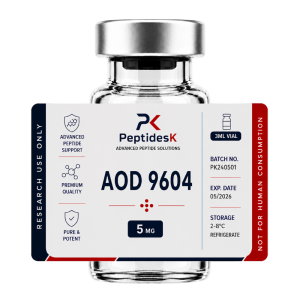
| AOD 9604 5mg | Selective Adrenergic Activity | Accelerating lipid breakdown, triglyceride clearing, and non-glycemic metabolic models. | Adipocyte Matrix | 16-AA Fragment |
Synergistic Research Application Notice
In broad metabolic and growth factor research lines, investigators frequently study GHRH analogues in parallel with selective lipolytic structures like HGH Fragment to cross-examine cellular mass adaptations against lipid mobilization. The 5mg format provides the exact flexibility required to run pilot low-dose titration runs without fluid reconstitution waste. While alternative series catalog options track isolated fat cell removal or telomere repair, standalone sermorelin acetate provides a clean reference for natural pulsatile growth axis mapping.
Storage & Reconstitution Guidelines
To keep your high-purity peptide stable and prevent its delicate 29 amino acid chain sequence from breaking down early, you must follow strict temperature parameters. Proper handling ensures that your laboratory assay baselines remain fully consistent and free from degradation artifacts over time.
- FREEZER (-20°C)
Lyophilized Peptide Powder: Store the dry crystalline powder vial inside a laboratory freezer at -20°C to -80°C for long-term storage. This fully seals the peptide configuration against sequence breakdown for up to 24 months. - ROOM TEMP (25°C)
Shipping & Transit Window: In its dry, vacuum-desiccated solid state, it is highly resilient. It can easily endure ambient transport fluctuations up to 25°C for a maximum of 3 weeks. Always return the vials to deep-freeze storage upon delivery. - REFRIGERATOR (2°C – 8°C)
Reconstituted Liquid Phase: Once mixed into a liquid form, the solution must be stored strictly under refrigeration between 2°C and 8°C. Reconstituted fluid phases face natural structural decay; completely exhaust the active liquid within 10 to 14 days maximum. Never freeze a peptide after it has been liquified.
Step-by-Step Sermorelin Reconstitution Guide
Because short-chain peptide matrices are highly sensitive to sudden physical pressure shifts, follow this precise protocol to dissolve your 5mg powder cake into a stable fluid layer:
- Temperature Adjusting: Allow the 5mg vial to naturally reach ambient room temperature equilibrium before removing the plastic security cap. This step blocks condensation moisture from contaminating the dry cake.
- Sanitizing the Septum: Thoroughly clean the upper rubber entry core septum using a fresh, high-grade isopropyl alcohol sterile wipe.
- Gentle Liquid Cascade: Draw your laboratory diluent (such as sterile bacteriostatic water) and slowly inject 1ml down the internal glass envelope wall. Let the fluid cascade gently down the glass rather than spraying it directly at the powder to avoid structural kinetic shock paths.
- Zero Aggressive Agitation: Do not shake, vibrate, or vortex the vial. Mechanical friction shears peptide chains easily. Instead, gently roll and rotate the vial horizontally in circular, concentric movements until the white solid cake fully transitions into a pristine, crystal-clear transparent liquid layer.
Analytical Verification & Lab Reports: Inspect our latest batch-specific HPLC purity charts, mass spectrometry results, and independent Certificate of Analysis (COA) documents directly on our PeptidesK Third-Party Lab Testing Page.
To buy sermorelin research peptide or source verified sermorelin 5mg vials for sale backed by high HPLC purity and fast domestic shipping, order directly from peptidesk.com.
Shop by Goal Categories
Explore our high-purity research compounds and peptides categorized by primary experimental targets and research goals:
| Goal Category | Primary Research Focus |
|---|---|
| Anti-Aging & Longevity Peptides → | Cellular renewal, telomere maintenance, and anti-senescence research models. |
| Fat Loss & Metabolic Peptides → | Incretin mimetics, lipolysis acceleration, and metabolic flexibility profiling. |
| Muscle Growth & Building Peptides → | Anabolic signaling, GH secretagogues, and protein synthesis acceleration. |
| Recovery & Healing Peptides → | Soft tissue repair, tendon-to-bone recovery, and systemic cell migration. |
| Focus & Cognitive Peptides → | Nootropic signaling, neuroprotection, and synaptic plasticity assays. |


There are no reviews yet.