
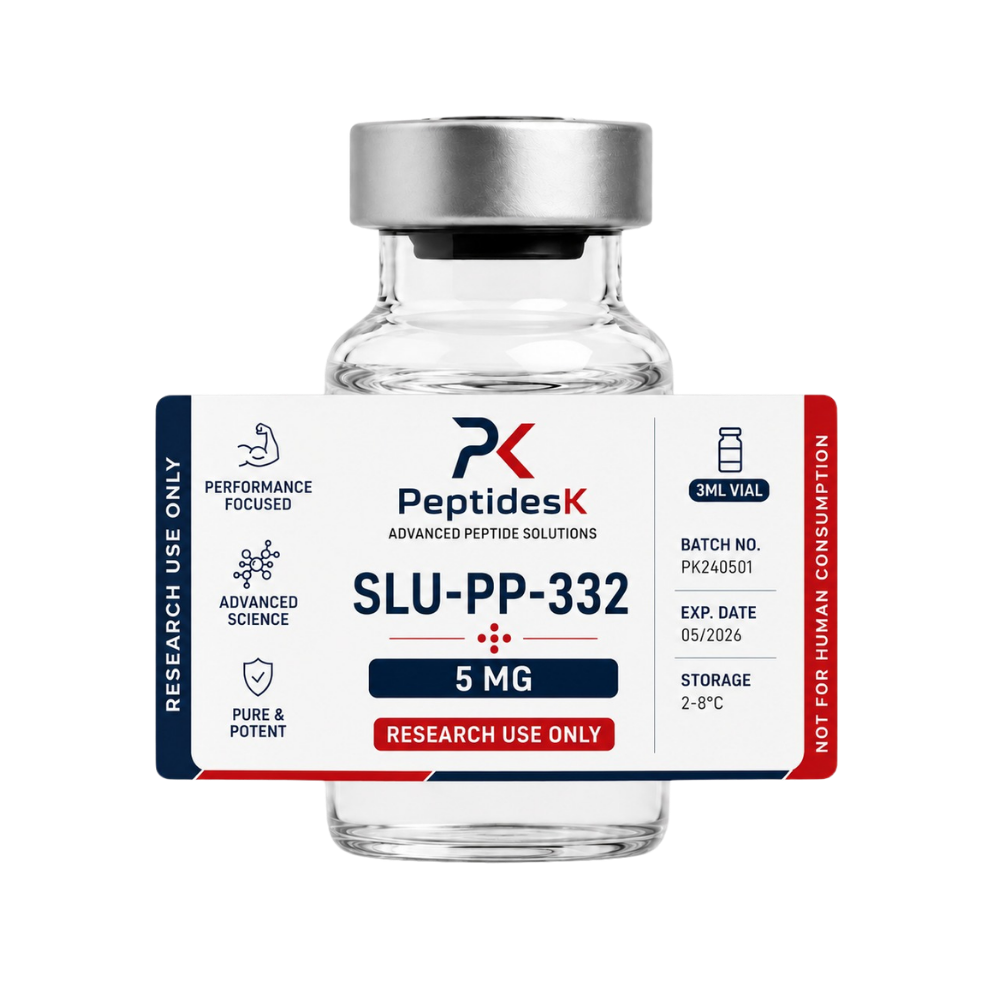
Description
Quick-Reference Overview Matrix
For efficient laboratory evaluation, the matrix below consolidates the core analytical, storage, and cross-reference parameters of SLU-PP-332 5mg.
| Core Parameter | Technical Summary & Quick Data | Internal Cross-Reference |
|---|---|---|
| Purity & Grade | ≥ 98% HPLC Certified Sterile filtered, vacuum-sealed lyophilized formulation optimized for metabolic tracking assays. | View High-Purity Series → |
| Primary Target Path | ERR Pan-Agonism: Activates Estrogen-Related Receptors to stimulate oxidative muscle fiber transitions and enhanced fatty acid lipolysis. | Metabolic Research Series → |
| Storage Protocol | Lyophilized: -20°C to -80°C (Up to 24 months). Reconstituted: 2°C to 8°C (Must use within 10–14 days). | Buy Reconstitution Diluents → |
| Synergistic Assays | Frequently co-evaluated with other bioenergetic or fat-loss modulators like SR-9009 or Cardarine alternatives for metabolic research models. | Explore Tissue Repair Series → |
What Is SLU-PP-332 5mg & How Does It Work?
SLU-PP-332 5mg (scientifically classified as a synthetic ERR agonist small molecule or exercise mimetic compound) is a potent, cell-permeable Estrogen-Related Receptor agonist that targets ERRalpha (ERRα), ERRbeta (ERRβ), and ERRgamma (ERRγ) nuclear receptors. Unlike classic peptide hormones that engage surface membrane receptors, SLU-PP-332 diffuses directly across lipid bilayers to bind cytosolic nuclear receptor complexes, triggering metabolic transcriptomic shifts similar to those induced by endurance exercise.
In modern biochemistry, metabolic profiling, and physical performance research, our SLU-PP-332 5mg vial serves as a premier micro-scale reference standard. By activating ERR target gene networks without muscle contraction or physical exertion, it allows researchers to examine oxidative muscle fiber transformations, mitochondrial biogenesis, and fatty acid oxidation loops cleanly in laboratory models. To review batch-specific test results and third-party HPLC verification, visit peptidesk.com.
SLU-PP-332 5mg Technical Specifications
| Technical Property | Specification Standard |
|---|---|
| Product Format | 5mg Purified Crystalline Powder / Vial |
| Chemical Structure | Cell-Permeable Non-Peptide Synthetic ERR Agonist |
| Molecular Formula | C23H17N3O3S |
| Molecular Weight | 415.47 g/mol |
| Purity Baseline | ≥ 98.0% Certified via HPLC Assays |
| Physical Appearance | Sterile filtered, off-white to light yellow lyophilized cake |
| Core Target Nodes | Estrogen-Related Receptors (ERRα/β/γ), PGC-1α Coactivation, Mitochondrial Biogenesis |
Research Compliance Notice: Products supplied as SLU-PP-332 powder are intended strictly for laboratory testing, in vitro diagnostics, and scientific profiling. They are strictly not approved for human clinical use, oral intake, or personal self-administration.
How Does SLU-PP-332 Work in Laboratory Assays?
Investigating how does SLU-PP-332 work at the sub-cellular level reveals pan-agonist activity across the Estrogen-Related Receptor family. ERRs are orphan nuclear receptors that control expression networks for genes involved in cellular respiration, oxidative phosphorylation, and lipid catabolism.
When SLU-PP-332 binds to the ligand-binding domain of ERR nuclear receptors, it initiates several metabolic cascades:
- PGC-1alpha Coactivation & Mitochondrial Biogenesis: Synergizes with peroxisome proliferator-activated receptor gamma coactivator-1 alpha (PGC-1α) to increase mitochondrial volume density and oxidative ATP generation.
- Type I Muscle Fiber Transformation: Upregulates slow-twitch (Type I) oxidative muscle fiber genes in skeletal muscle cells, enhancing endurance capacity and fatigue resistance in culture.
- Accelerated Fatty Acid Oxidation: Promotes lipid oxidation while suppressing lipogenesis, helping clear intracellular lipid droplets in SLU-PP-332 metabolic research models.
Core Pathways & Action Matrix
| Target Pathway | Observed Cellular Action | Primary Research Goal |
|---|---|---|
| ERR Agonism (α/β/γ) | Binds orphan nuclear receptors to upregulate endurance exercise gene transcription. | Quantifying transcriptomic shifts without muscle movement. |
| Mitochondrial Expansion | Increases mitochondrial density and electron transport chain enzyme expression. | Measuring cellular respiration and oxygen consumption rates. |
| Lipid Clearance Loop | Directs cell fuel consumption toward stored triglycerides and free fatty acids. | Tracking adipocyte shrinkage and lipid accumulation drops. |
SLU-PP-332 5mg Research Applications & Metabolic Profiling
In modern biochemistry, obesity disease models, and age-related muscle loss publications, SLU-PP-332 exercise mimetic research is monitored for its ability to mimic physical endurance training at the gene expression level. Utilizing a micro-scale 5mg format allows researchers to run pilot calibration rows, high-throughput multi-well plates, and concentration titration curves with high accuracy.
Primary areas of scientific evaluation include:
- Obesity & Metabolic Syndrome Models: Evaluating reductions in body fat accumulation and improvements in metabolic flexibility without dietary restriction.
- Sarcopenia & Muscle Atrophy Research: Investigating whether ERR agonism preserves oxidative fiber density in aging or immobilized muscle tissue models.
- Endurance Capacity & Energy Kinetics: Measuring cellular ATP yield, oxygen consumption rate (OCR), and basal metabolic output under controlled testing conditions.
Research Overview: Benefits vs. Technical Limitations
| Observed Research Benefits | Technical Risks & Limitations |
|---|---|
| • Direct Nuclear Entry: Non-peptide small molecule architecture allows rapid diffusion across cell membranes without requiring surface receptor docks. | • Solvent Specificity: Requires mild organic solvent assistance (e.g., DMSO dilution) prior to aqueous reconstitution for optimal dissolution. |
| • Exercise Mimetic Action: Upregulates endurance gene expression cascades without physical muscle movement or mechanical contraction. | • Concentration Sensitivity: Oversaturating nuclear receptor channels in cell assays can alter baseline gene transcription networks. |
How Does SLU-PP-332 Compare to Other Research Compounds?
To assist in experimental protocol coordination, the table below provides a comparative analysis of SLU-PP-332 5mg against alternative metabolic, lipolytic, and mitochondrial regulators in our catalog:
| Research Compound | Mechanism of Action | Primary Laboratory Focus | Target Nodes | Compound Class |
|---|---|---|---|---|
| SLU-PP-332 5mg(This Product) | Pan-ERR Receptor Agonism | Exercise mimetic gene activation, mitochondrial biogenesis, and Type I fiber conversion. | ERRα / ERRβ / ERRγ | Small Molecule |
| 5-Amino-1MQ 5mg | Selective NNMT Inhibition | Intracellular NAD+ salvage up-regulation, lipogenesis blocking, and sirtuin pathway tracking. | Cytosolic NNMT | Small Molecule |
| MOTS-c 10mg | AMPK Pathway Activation | Mitochondrial metabolic signaling, insulin sensitivity tracking, and glucose clearance loops. | AMPK Pathway | Polypeptide (16-AA) |
| Retatrutide 10mg | Triple Incretin Agonism | GCGR, GIPR, and GLP-1R surface loop saturation, multi-incretin sync, and lipid oxidation. | GIPR/GLP-1R/GCGR | Modified Peptide |
Storage & Reconstitution Guidelines for SLU-PP-332 5mg
To preserve chemical stability and protect the non-peptide small molecule ring structure of SLU-PP-332, proper temperature management and correct reconstitution protocols are required:
- FREEZER (-20°C)
Unopened Lyophilized Powder: Store dry powder vials in a laboratory freezer at -20°C to -80°C for long-term stability up to 24 months. Protect from direct light. - TRANSIT RESILIENCE
Unmixed Powder: Highly stable during transit; can withstand ambient shipping temperatures up to 25°C for up to 4 weeks. Place in freezer storage upon arrival. - REFRIGERATOR (2°C – 8°C)
Reconstituted Liquid Phase: Store dissolved solutions under strict refrigeration between 2°C and 8°C. Exhaust active liquid within 21 days maximum. Do not refreeze liquid solutions.
Step-by-Step Reconstitution Protocol
- Temperature Adaptation: Allow the 5mg vial to reach room temperature naturally before opening the cap to prevent condensation moisture from forming inside the glass.
- Septum Sanitization: Wipe the upper rubber entry stopper thoroughly using a fresh, sterile isopropyl alcohol swab.
- Solvent Matrix Selection: Small molecules frequently require a brief pre-solubilization step using a mild laboratory solvent (such as DMSO) before introducing sterile bacteriostatic water. Inject diluent slowly down the inside glass wall.
- Gentle Dissolution: While non-peptide architectures resist mechanical shearing better than long protein chains, gentle handling ensures pristine solution homogeneity. Roll the vial horizontally between your palms until the powder fully dissolves.
SLU-PP-332 Purity, Price & Buying Online in the USA
When preparing to buy SLU-PP-332 USA stock or evaluating competitive SLU-PP-332 5mg price parameters online, verifying third-party laboratory quality is critical. Low-grade synthesis intermediates or solvent residues can interfere with nuclear receptor assays and yield inaccurate research data.
Every lot of our SLU-PP-332 for sale inventory is verified using High-Performance Liquid Chromatography (HPLC) and Mass Spectrometry (MS) to guarantee an ultra-high SLU-PP-332 99% purity baseline (≥98.0% certified). To check batch reports or order SLU-PP-332 online with fast domestic delivery across the USA, place your order directly through peptidesk.com.
Analytical Verification & Lab Reports: Inspect our latest batch-specific HPLC purity charts, mass spectrometry results, and independent COA documents directly on our PeptidesK Third-Party Lab Testing Page.
To buy SLU-PP-332 5mg vials backed by lot-matched laboratory COAs and fast domestic shipping, visit peptidesk.com.
Shop by Goal Categories
Explore our high-purity research compounds and peptides categorized by primary experimental targets and research goals:
| Goal Category | Primary Research Focus |
|---|---|
| Anti-Aging & Longevity Peptides → | Cellular renewal, telomere maintenance, and anti-senescence research models. |
| Fat Loss & Metabolic Peptides → | Incretin mimetics, lipolysis acceleration, and metabolic flexibility profiling. |
| Muscle Growth & Building Peptides → | Anabolic signaling, GH secretagogues, and protein synthesis acceleration. |
| Recovery & Healing Peptides → | Soft tissue repair, tendon-to-bone recovery, and systemic cell migration. |
| Focus & Cognitive Peptides → | Nootropic signaling, neuroprotection, and synaptic plasticity assays. |



There are no reviews yet.