Description
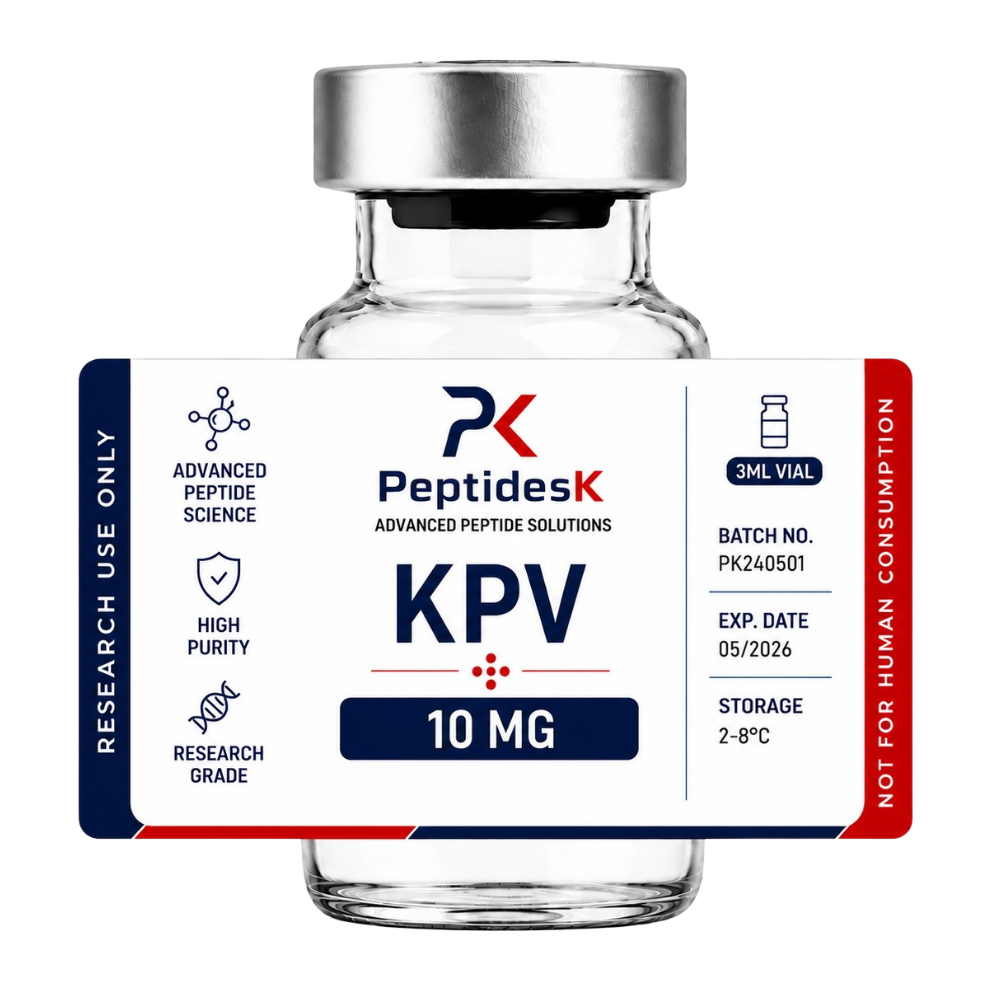
KPV 10mg Core Specifications
Deep technical specification parameters optimized for integrating 10mg KPV into focused, multi-well laboratory screening protocols.
| Research Parameter | Assay Benchmark Profile | Internal Catalog Link |
|---|---|---|
| Sequence Blueprint | Lys-Pro-Val (C-Terminal Core Fragment of alpha-Melanocyte Stimulating Hormone) | High-Purity Series → |
| Molecular Weight | 356.5 Da (Ultra-short, highly stable tripeptide structure) | |
| Purity Baseline | ≥ 98.0% via High-Performance SEC-HPLC | Anti-Aging Compounds → |
| Assay Target | Intracellular NF-kB Inhibition & Epithelial Junction Stabilization |
What Is KPV Peptide?
KPV peptide is an ultra-short, synthetic tripeptide composed of three amino acids: Lysine, Proline, and Valine. Chemically, it represents the exact active C-terminal fragment of alpha-melanocyte-stimulating hormone (α-MSH). While the parent hormone naturally regulates skin pigmentation and immune responses, the isolated KPV sequence preserves potent anti-inflammatory and tissue-repair properties without triggering melanogenesis. Because it lacks the amino acid sequences needed to bind classic melanocortin receptors (such as MC1R), it does not cause skin tanning or pigment shifts.
Due to its tiny three-amino-acid molecular size, KPV easily crosses cellular membranes and penetrates deep into inflamed tissue structures. It exhibits impressive structural stability against enzymatic degradation compared to longer peptide chains. In modern biological research, this high-purity KPV 10mg vial provides an ideal reference standard for exploring tissue recovery, gut mucosal barrier stabilization, and localized immune response regulation without facing unwanted cross-reactivity noise. To inspect verified third-party laboratory test results for this batch, visit peptidesk.com.
Research Compliance Notice: Products sold as KPV research peptide are provided strictly for laboratory research, in vitro assays, and scientific testing. They are not approved for human consumption, medical diagnosis, or personal self-administration.
KPV 10mg Peptide Specifications
When choosing a high-grade KPV peptide 10mg product for laboratory research, reviewing physical and chemical specifications is essential. The 10mg format offers an optimal balance between active material capacity and liquid shelf-life stability, allowing researchers to set up multi-well plates and concentration rows cleanly.
| Technical Property | Laboratory Standard Specifications |
|---|---|
| Chemical Structure | Linear Tripeptide Structure (Lys-Pro-Val Sequence Architecture) |
| Active Core Payload | 10mg Purified Powder / Vial (Focused Titration Setup) |
| Purity Baseline | ≥ 98.0% Pure (Certified via HPLC Testing Rows) |
| Primary Research Focus | Intracellular NF-kB suppression, tight junction preservation, and antimicrobial tracking |
Every KPV 10mg vial is freeze-dried into a stable crystalline cake to ensure maximum shelf life during storage and shipping. Its small molecular weight allows it to dissolve rapidly and clearly in standard laboratory diluents, making it easy to integrate into cellular growth media or topical assay formulations.
KPV Mechanism of Action
The KPV mechanism of action operates primarily inside the cell cytoplasm rather than relying solely on surface receptor activation. Because of its tiny linear structure, KPV passes smoothly through cell membranes into target cells. Once inside, its primary function is blocking the activation and nuclear translocation of Nuclear Factor Kappa B (NF-kB). NF-kB is the master genetic switch that drives inflammatory responses in human tissue.
By suppressing NF-kB, KPV halts the transcription engine responsible for producing pro-inflammatory cytokines such as IL-1, IL-6, and TNF-alpha. In addition to shutting down cytokine production, KPV interacts with intracellular transport proteins (such as PepT1) to strengthen tight junction proteins between epithelial cells. This helps rebuild damaged skin or intestinal barriers, preventing fluid leaking and microbial infiltration. Furthermore, KPV possesses inherent antimicrobial properties, directly disrupting pathogen cell membranes due to its unique structural charge.
KPV Core Pathways & Action Matrix
| Target Pathway | Observed Cellular Action | Primary Research Goal |
|---|---|---|
| NF-kB Suppression | Enters cells directly to inhibit the transcription engine responsible for inflammatory loops. | Quantifying cytokine drop curves in inflamed tissue models. |
| Barrier Repair | Stabilizes tight junction architecture near cell boundaries to limit cellular leaking. | Measuring gut and skin epithelial restoration speeds. |
| Antimicrobial Action | Disrupts cell membrane patterns of target pathogens natively due to structural charge lines. | Tracking pathogen survival values without using traditional antibiotics. |
How Is KPV Used in Research?
Understanding how to use KPV in laboratory settings requires proper preparation, dilution, and storage. In scientific research, KPV is used in various experimental models, including cell cultures, tissue samples, and wound-healing assays. Because it is a lyophilized (freeze-dried) powder, it must be reconstituted with a sterile diluent like sterile bacteriostatic water or saline before application.
- FREEZER (-20°C)
Dry Powder Storage: Store unopened dry powder vials inside a laboratory freezer at -20°C for long-term stability up to 24 months. Keep away from light. - SHIPPING STABILITY
Unmixed Powder: Highly stable during transit; can handle room temperatures up to 25°C for up to 3 weeks. Place in freezer upon arrival. - REFRIGERATOR (2°C – 8°C)
Reconstituted Liquid: Once mixed into a liquid solution, store in the refrigerator between 2°C and 8°C. Use within 10 to 14 days maximum. Do not refreeze liquid.
When reconstituting your vial, allow the container to reach room temperature before removing the cap. Clean the rubber top with an alcohol wipe, and slowly inject your diluent down the inside glass wall. Roll the vial gently between your palms until the powder dissolves into a clear solution. Avoid shaking, as rough movements can disrupt delicate peptide bonds.
KPV Research & Scientific Evidence
KPV research spans multiple fields of biology, including immunology, gastroenterology, dermatology, and wound healing. Published literature highlights its remarkable ability to calm tissue inflammation without causing hormonal side effects. In inflammatory bowel disease (IBD) and ulcerative colitis models, research demonstrates that KPV reduces gut wall swelling, preserves the protective mucus layer, and accelerates mucosal lining recovery.
Additionally, KPV peptide research in dermatology shows that the tripeptide speeds up wound closure and reduces scar tissue formation. It regulates collagen organization during tissue repair, ensuring that new skin fibers form in an orderly pattern rather than creating raised scars. Its natural antimicrobial activity against pathogens like Staphylococcus aureus and Candida albicans further supports its role as a versatile tissue-protecting compound.
How Does KPV Compare to Other Peptides?
To assist in protocol design, it is important to understand how KPV differs from other compounds in our laboratory catalog. While many peptides target specific surface receptors to trigger hormonal or metabolic shifts, KPV works non-hormonally inside cells to manage immune responses and tissue structure.
| Research Peptide | Mechanism of Action | Primary Laboratory Focus | Target Nodes | Peptide Structure |
|---|---|---|---|---|
| KPV 10mg(This Product) | Intracellular NF-kB Inhibition | Epithelial barrier repair mapping, anti-inflammatory cell loops, and tissue stabilization. | Intracellular Cytoplasm | Tripeptide (3-AA) |
| Melanotan 1 10mg | Selective MC1R Agonism | Dark pigment synthesis induction, light exposure skin cell survival mapping, and photoprotection. | MC1 Receptor | Linear Core (13-AA) |
| HGH Fragment | Lipolytic Pathway Trigger | Adipose tissue reduction mapping, isolated fat burning markers, and growth-independent research. | Beta-3 Adrenergic | 176-191 Segment |
| Epithalon 10mg | TERT Gene Promoter | Telomere extension mapping, chromatin epigenetic unfolding, and cellular lifespan tracking. | Nuclear DNA / TERT | Tetrapeptide (4-AA) |
KPV Side Effects & Safety Profile
Evaluating KPV safety is a key step in setting up research protocols. Overall, the peptide exhibits an exceptional safety profile in laboratory studies. Because KPV is a naturally occurring fragment derived from an endogenous body hormone, cell cultures and animal models tolerate it well with minimal cytotoxicity.
Documented KPV side effects in scientific literature are virtually non-existent at standard experimental doses. Unlike larger melanocortin peptides, KPV does not cause nausea, blood pressure changes, or skin darkening because it does not bind to MSH receptors. Its selective intracellular pathway makes it a safe, clean compound for studying long-term tissue recovery and mucosal health.
KPV COA & HPLC Testing
When looking to order KPV 10mg for sale or source high-purity research materials, verifying analytical testing records is essential. Low-grade peptides containing chemical impurities or truncated fragments can distort laboratory results and ruin experimental assays. Every lot of our KPV peptide is tested by an independent third-party laboratory.
Our quality verification process involves two core tests. First, High-Performance Liquid Chromatography (KPV HPLC) testing confirms that the peptide reaches a minimum purity level of 98.0%. Second, Mass Spectrometry confirms the exact molecular weight and amino acid identity of the Lys-Pro-Val sequence. A lot-specific Certificate of Analysis (KPV COA) is available for every batch to guarantee full transparency.
Lab Testing & COA Reports: View our latest batch HPLC purity charts, mass spectrometry analysis, and independent COA documents directly on our PeptidesK Third-Party Lab Testing Page.
Buy KPV Peptide for Research
If you are ready to buy KPV peptide for your laboratory, PeptidesK provides batch-certified buy KPV 10mg vials manufactured under strict quality controls. Our products are designed specifically for qualified researchers, academic institutions, and analytical laboratories requiring high-purity compounds.
To order premium KPV peptide for sale with fast domestic shipping and verified HPLC batch reports, place your order directly through peptidesk.com.
Shop by Goal Categories
Explore our high-purity research compounds and peptides categorized by primary experimental targets and research goals:
| Goal Category | Primary Research Focus |
|---|---|
| Anti-Aging & Longevity Peptides → | Cellular renewal, telomere maintenance, and anti-senescence research models. |
| Fat Loss & Metabolic Peptides → | Incretin mimetics, lipolysis acceleration, and metabolic flexibility profiling. |
| Muscle Growth & Building Peptides → | Anabolic signaling, GH secretagogues, and protein synthesis acceleration. |
| Recovery & Healing Peptides → | Soft tissue repair, tendon-to-bone recovery, and systemic cell migration. |
| Focus & Cognitive Peptides → | Nootropic signaling, neuroprotection, and synaptic plasticity assays. |

There are no reviews yet.